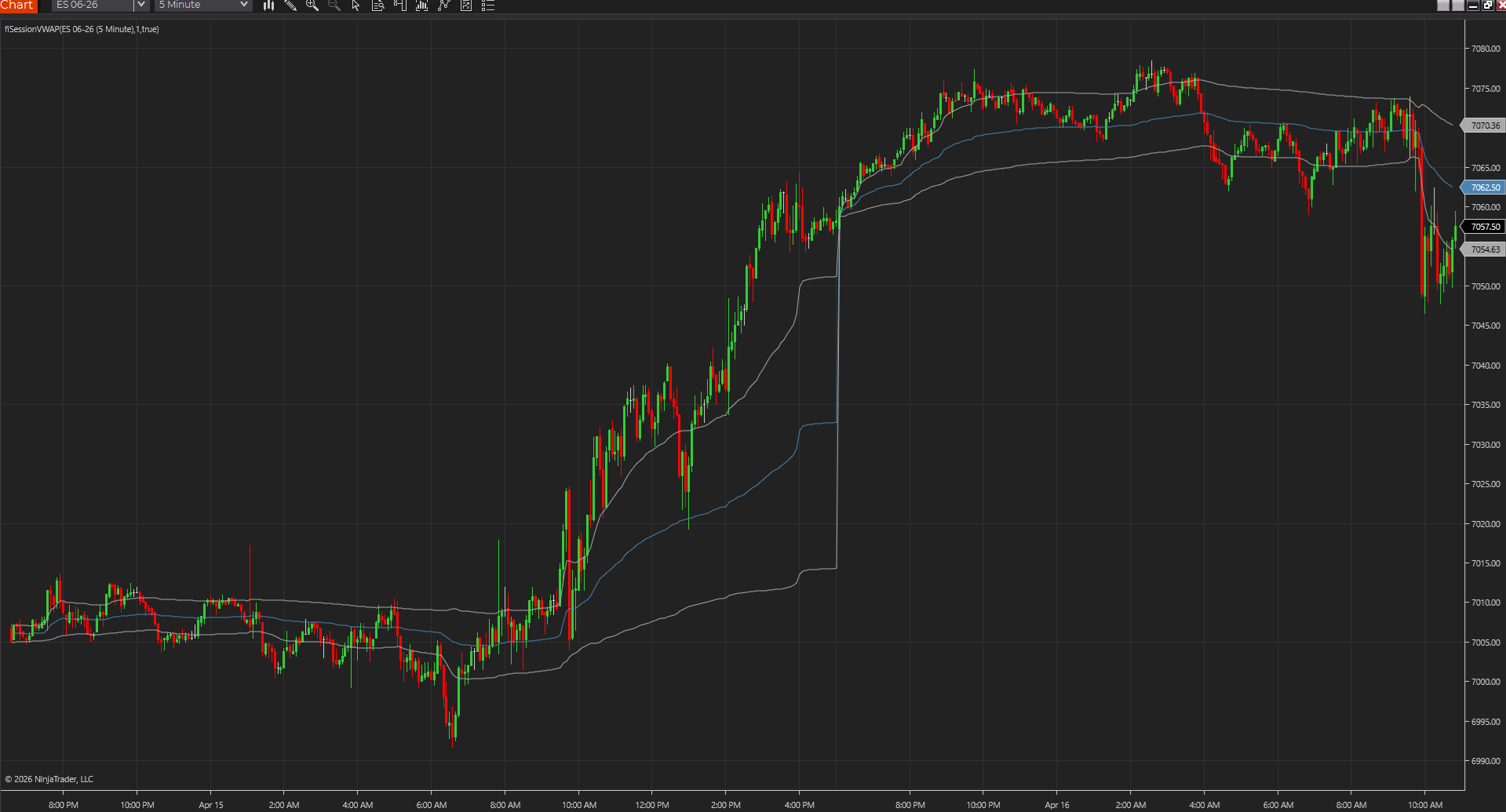
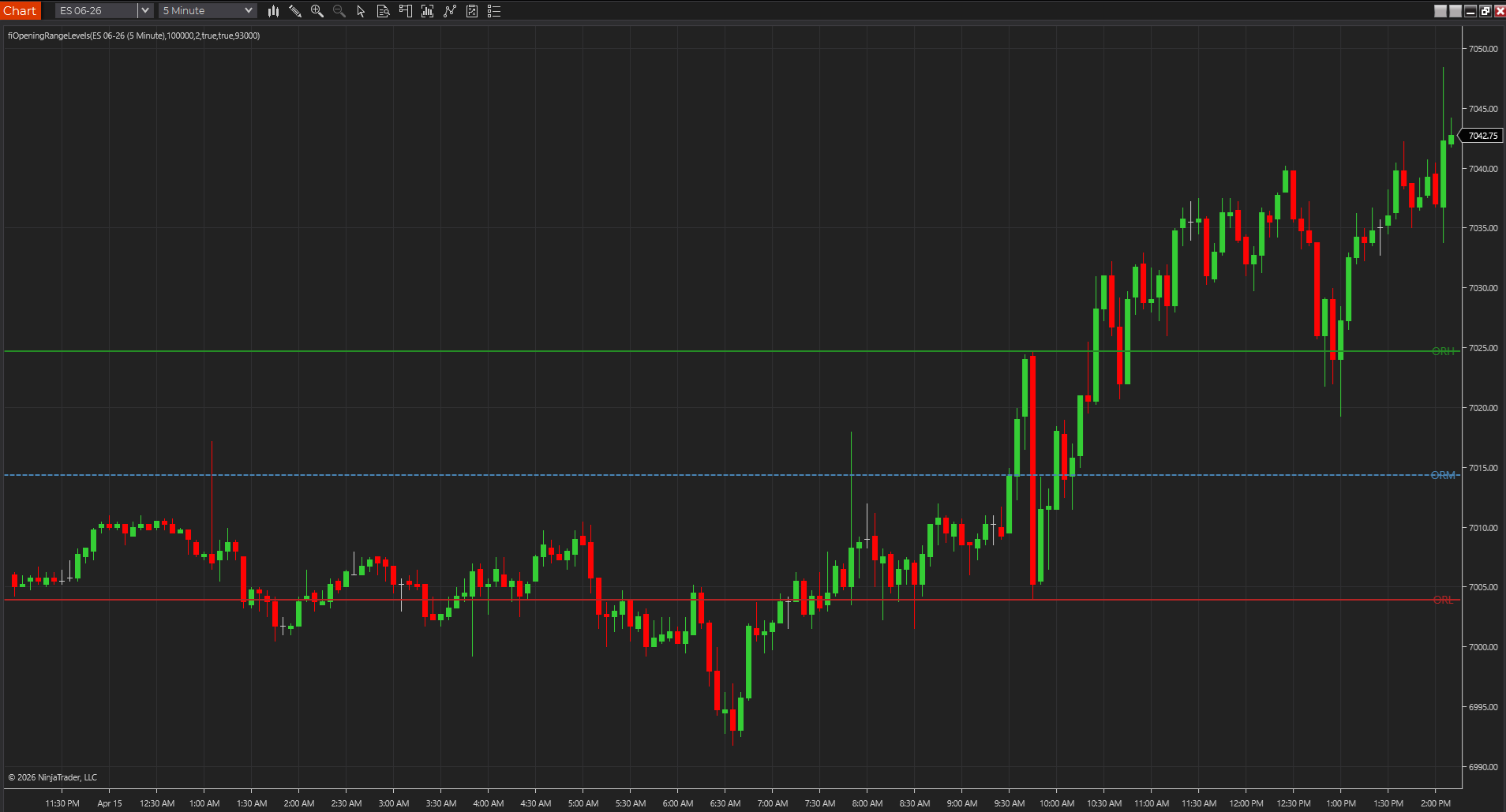
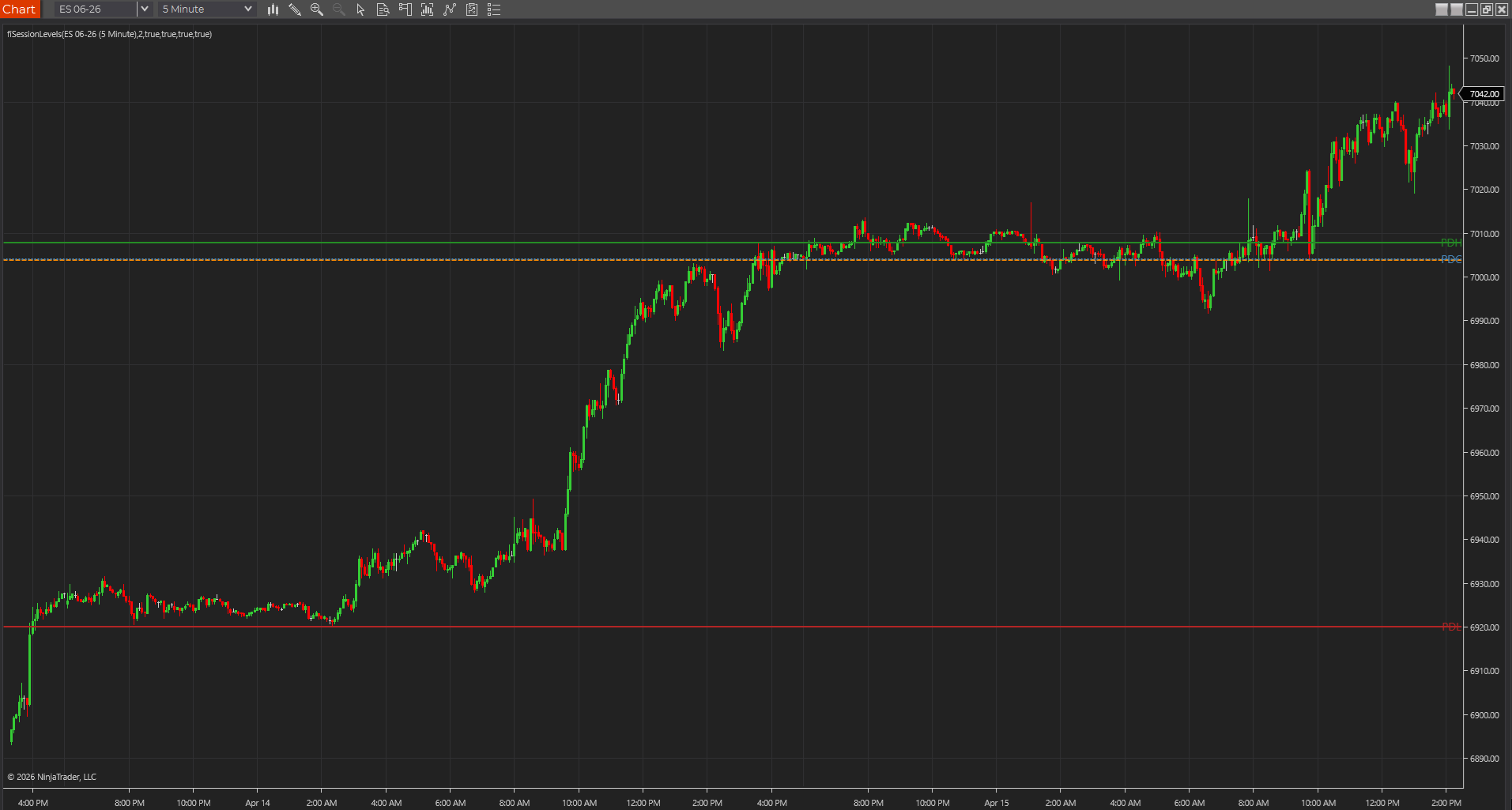
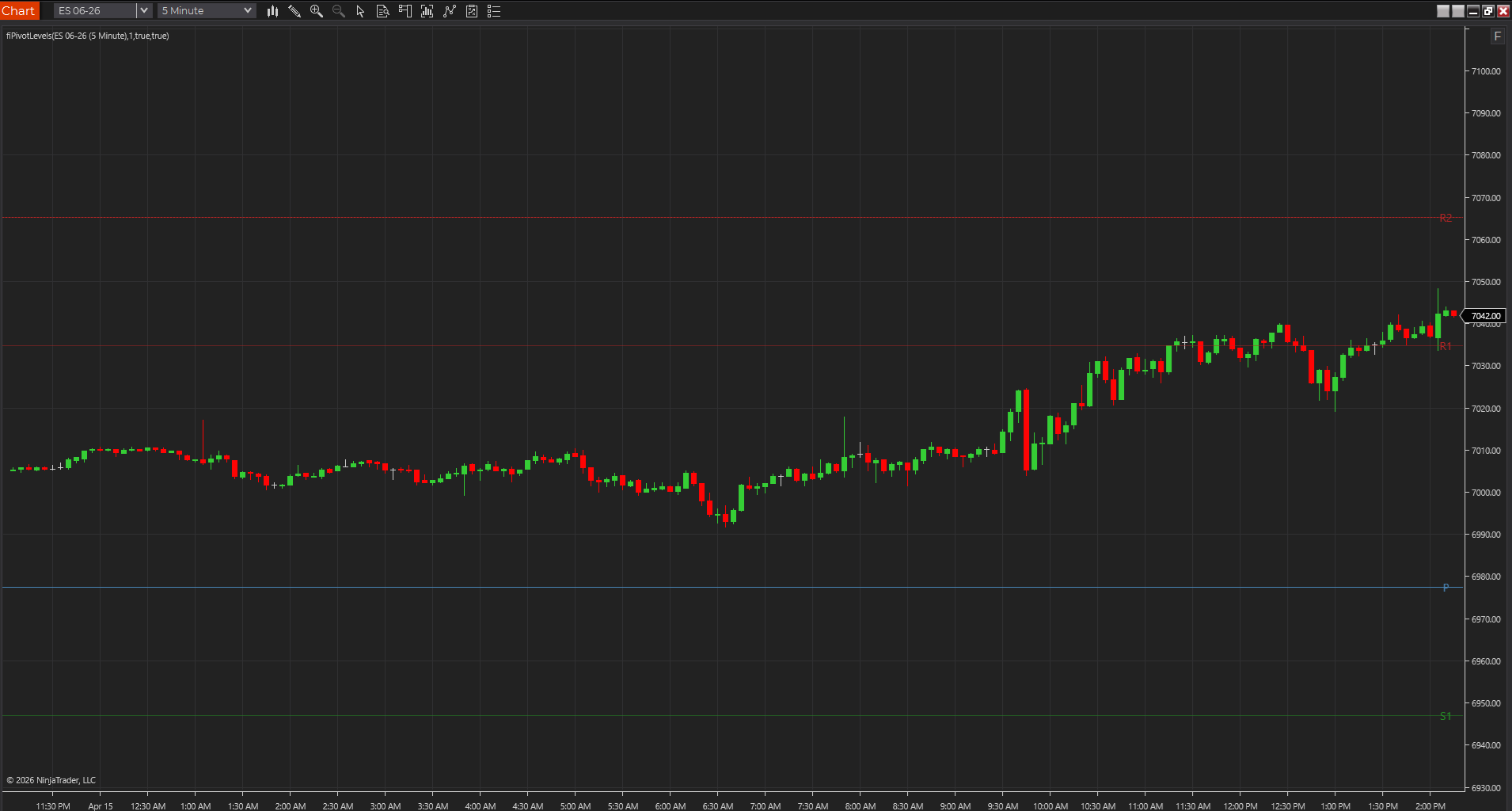
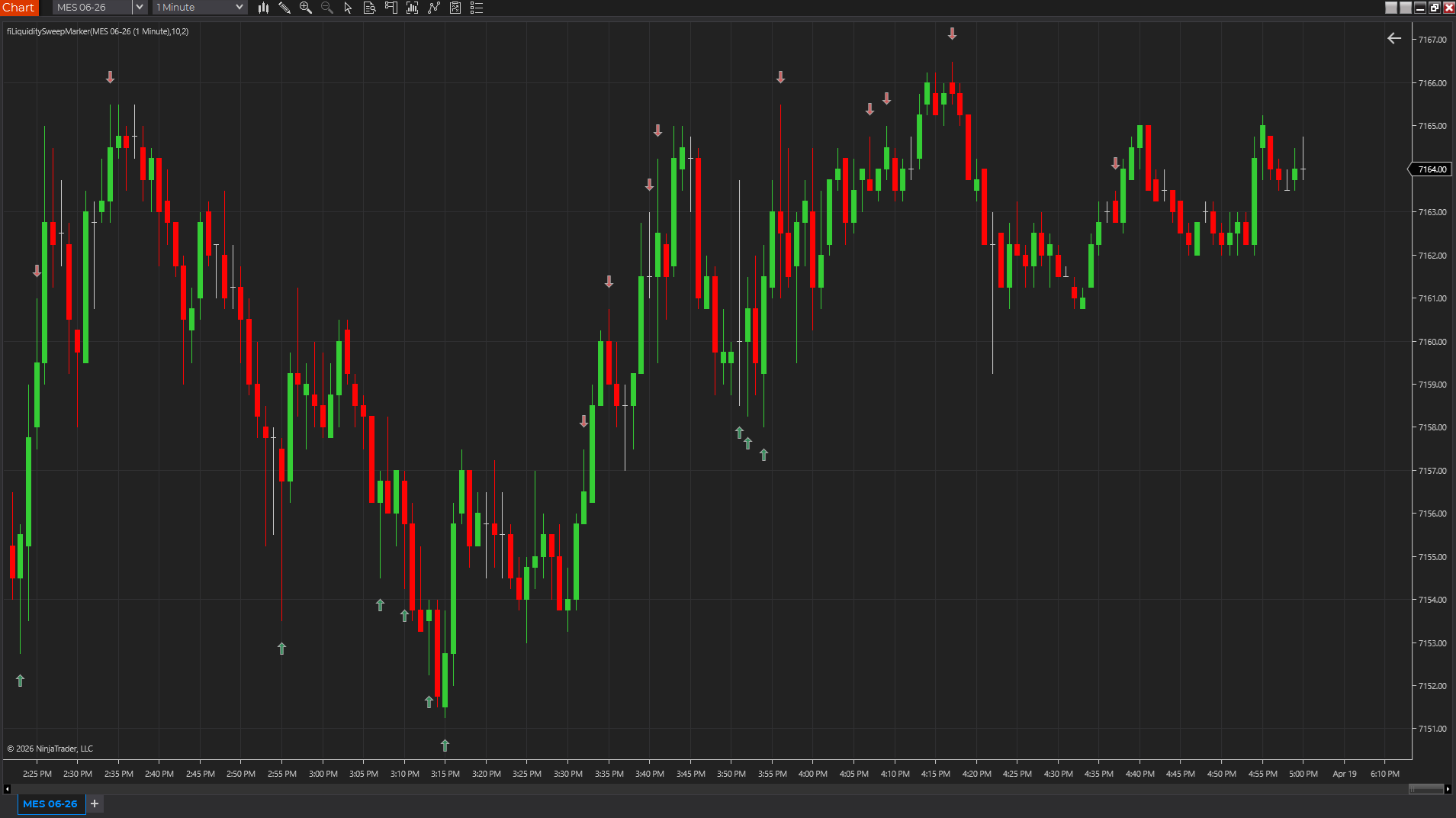
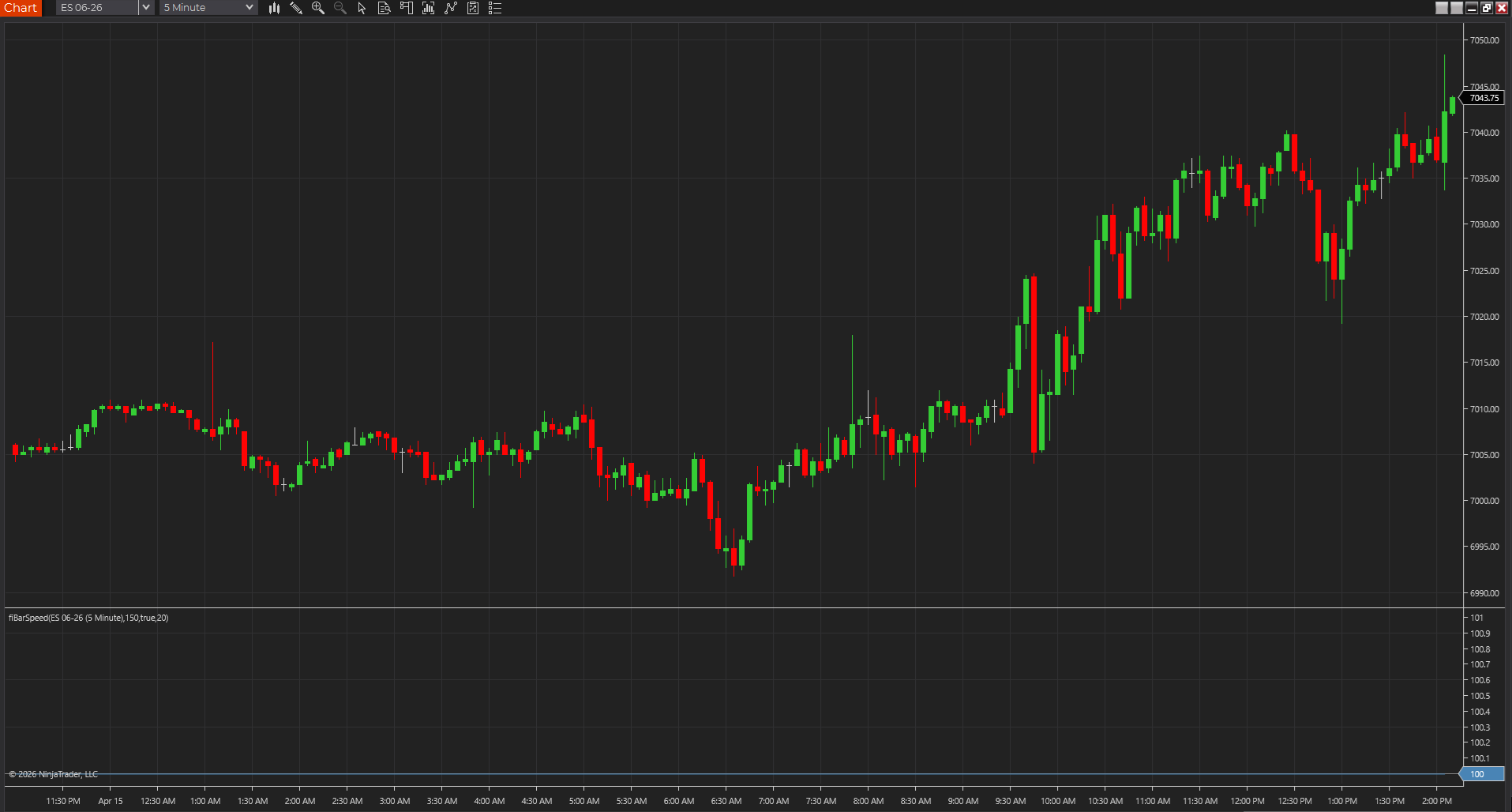
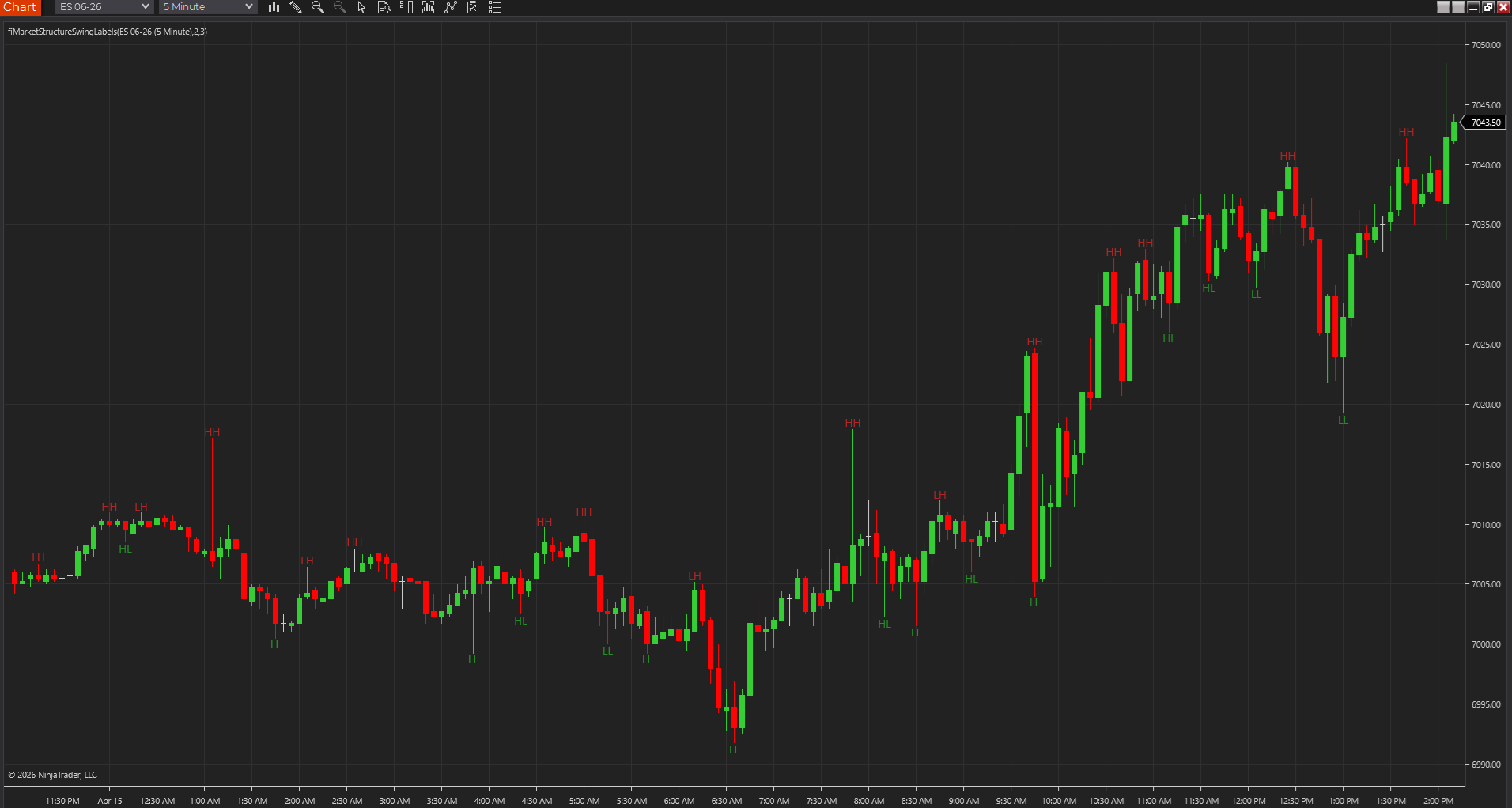
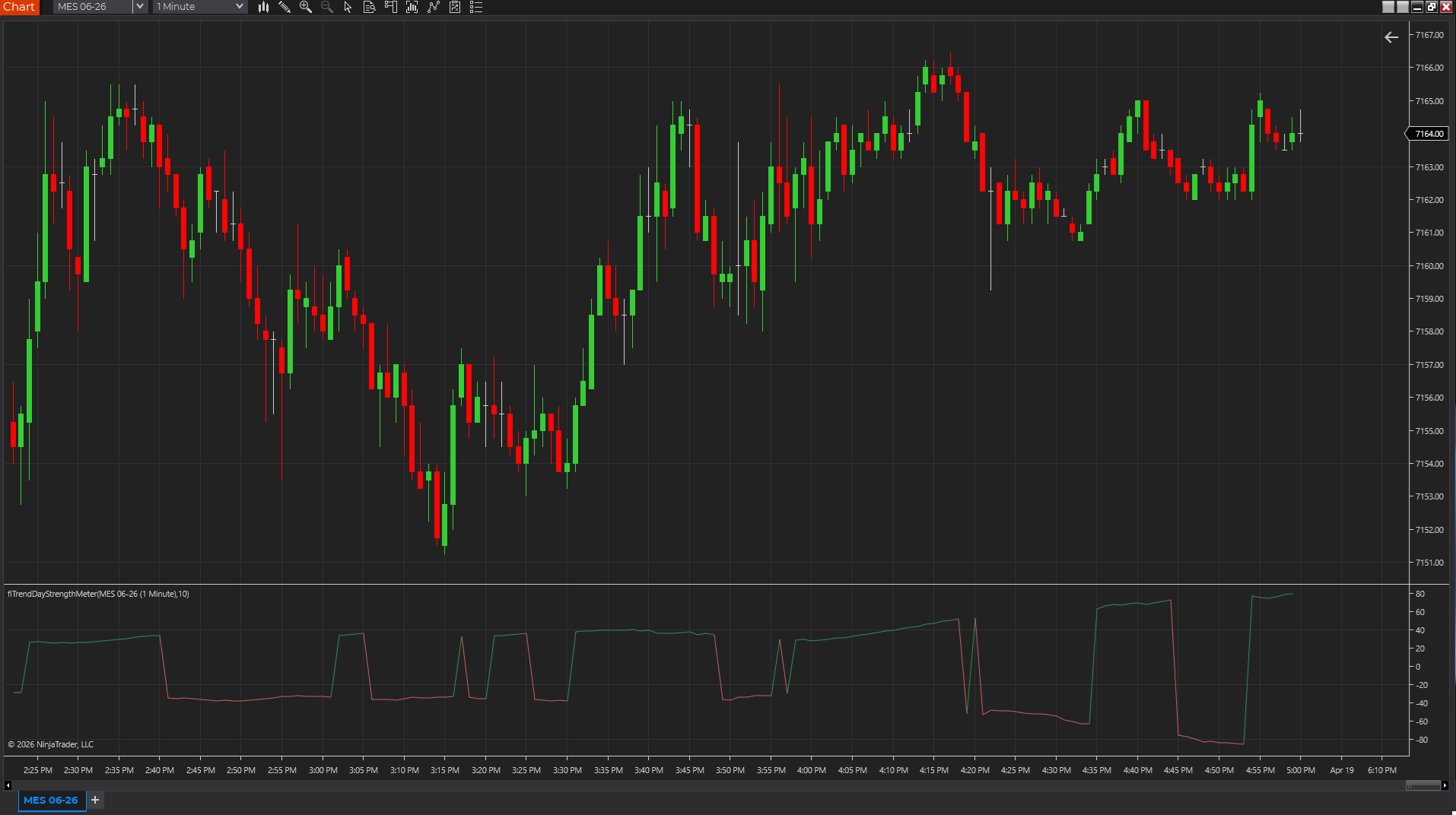
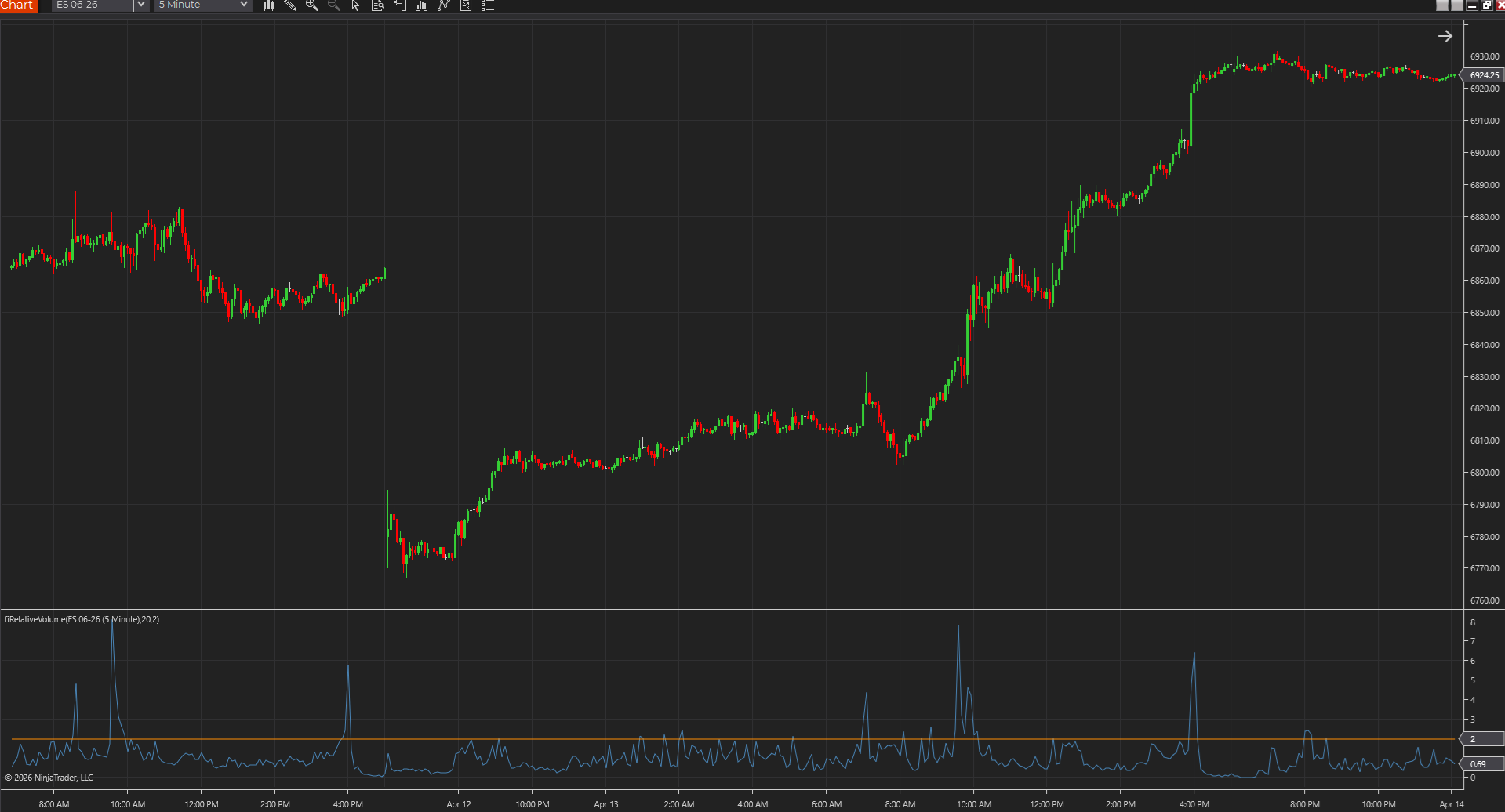
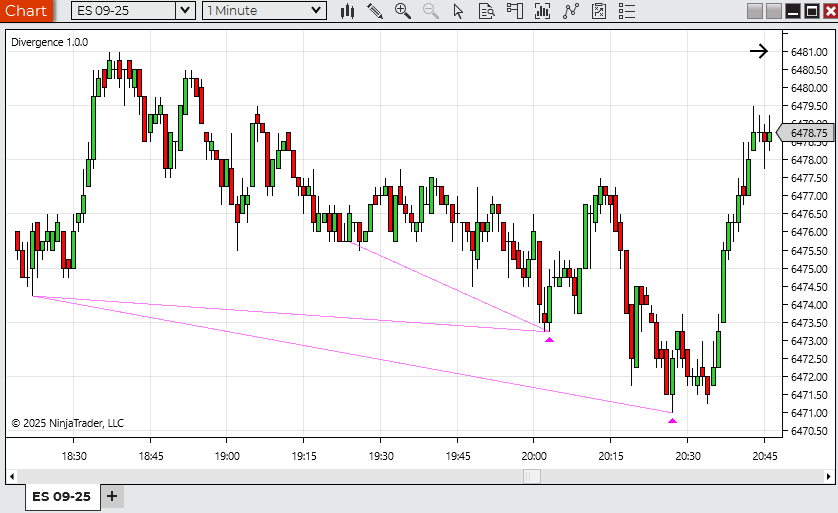
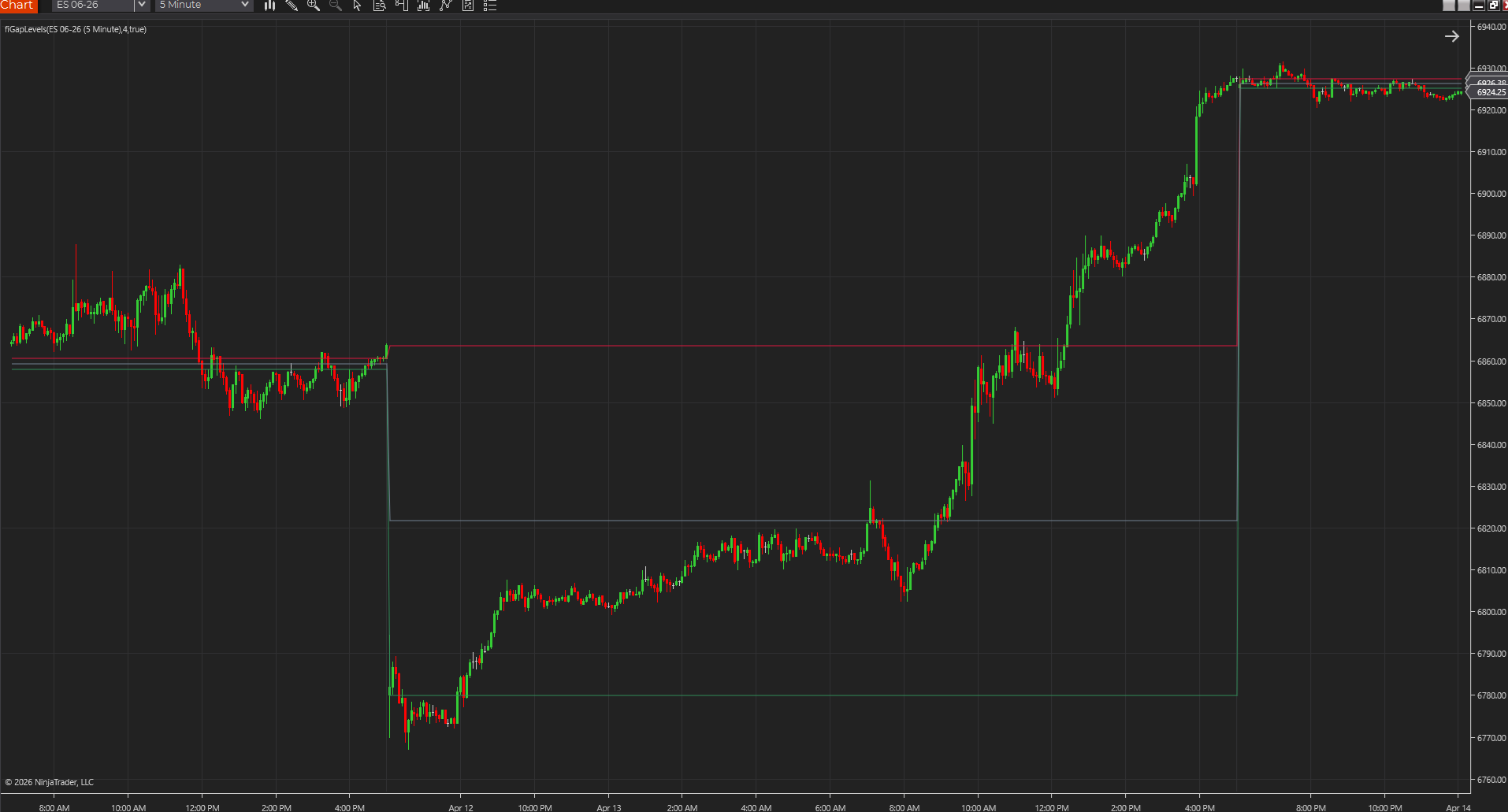
A first-error-first checklist for repairing AI-generated NinjaScript in NinjaTrader 8, including compiler codes, lifecycle mistakes, missing dependencies, and the point where a human review is safer.
10 min readSupporting guide3 related tools3 chart screenshots
A NinjaTrader 8 debugging checklist for indicators that look correct historically but drift, lag, reset, or plot different values in real time after AI-assisted coding.
11 min readSupporting guide3 related tools3 chart screenshots
A practical guide to free NinjaTrader indicators for futures traders, with hosted download paths, chart screenshots, install notes, and a starter matrix for session levels, participation, volatility, and intraday decisions.
12 min readFeatured guide7 related tools7 chart screenshots
A download-first guide to the free NinjaTrader 8 indicators currently hosted in the library, including NT8 ZIP downloads, screenshots, install notes, and the futures workflow each tool supports best.
NinjaTrader 8Supporting guide6 related tools6 chart screenshots
A practical guide to the best futures platforms and charting software for indicator traders, comparing charting depth, scripting workflows, install friction, and how naturally each platform fits active futures trading.
Decision guideSupporting guideWorkflow articleExplainer format
A practical guide to choosing the best platform for futures day traders, with a focus on chart routine, execution comfort, charting-software fit, and the workflow you actually want to build every morning.
7 min readSupporting guideWorkflow articleExplainer format
A practical guide to futures charting software for active traders who need cleaner chart workflows, faster layout decisions, and a realistic read on when NinjaTrader, TradingView, TradeStation, or MultiCharts fits best.
8 min readSupporting guideWorkflow articleExplainer format
A futures-first shortlist of NinjaTrader indicators for traders who need cleaner session context, participation cues, structure, and risk framing instead of a crowded chart.
9 min readSupporting guide4 related tools4 chart screenshots
A practical guide to the TradeStation indicators that actually help on futures charts, with an emphasis on session context, opening structure, volatility framing, and the EasyLanguage workflow that keeps the chart readable.
9 min readSupporting guide4 related tools4 chart screenshots
A practical MultiCharts guide for futures traders who want a small set of PowerLanguage studies that actually improve the read, especially for session open, highs, lows, and opening workflow decisions.
9 min readSupporting guide4 related tools4 chart screenshots
A practical guide to the best MT4 indicators for MetaTrader 4 traders who want clearer chart context, risk planning, and trend structure instead of another pile of legacy downloads.
Platform guideSupporting guide3 related tools3 chart screenshots
A practical guide to the best MT5 indicators for traders who want cleaner MetaTrader 5 chart context, stronger session structure, and a more durable workflow than random marketplace clutter.
Platform guideSupporting guide3 related tools3 chart screenshots
A practical example of what a futures session plan should include before the open: key levels, primary scenarios, invalidation points, risk checks, and the one condition that keeps you from forcing trades.
7 min readSupporting guide3 related tools3 chart screenshots
A practical guide to building a daily trading plan that improves consistency by clarifying levels, scenarios, invalidation, no-trade conditions, and pre-market risk before the first trade is even available.
8 min readSupporting guide3 related tools3 chart screenshots
A practical PowerLanguage guide to session open, high, low, and prior-session level logic in MultiCharts, including what to verify when Opens, Highs, and Lows functions appear to disagree with the chart.
9 min readSupporting guide3 related tools3 chart screenshots
A practical MultiCharts session-functions guide for traders who need one landing page for Opens, Highs, Lows, Closes, reset logic, and the chart checks that prove the values are correct.
8 min readSupporting guide3 related tools3 chart screenshots
A step-by-step Pine Script walkthrough for building a session VWAP indicator from scratch, plus the one-line built-in shortcut once you understand the underlying calculation.
7 min readSupporting guideWorkflow articleExplainer format
A practical decision guide for traders who are deciding whether a free NinjaTrader indicator is enough, whether to request a free tool, or whether paid NinjaScript development is the cleaner path.
8 min readSupporting guide3 related tools3 chart screenshots
A trader-focused comparison of free NinjaTrader indicators and custom NinjaScript work, including when a public download is enough and when a paid build is more realistic.
7 min readSupporting guide3 related tools3 chart screenshots
A practical guide to what changes when a NinjaTrader indicator idea becomes an automated strategy, including alerts, entries, exits, risk rules, and Market Replay testing.
8 min readSupporting guide3 related tools3 chart screenshots
A high-intent guide for traders who want to move a TradingView Pine Script idea into NinjaTrader, with realistic expectations about rewrites, alerts, sessions, and source-code requirements.
8 min readSupporting guide3 related tools3 chart screenshots
A practical guide to diagnosing broken NinjaTrader indicators, including import errors, compile failures, missing plots, duplicate names, and when a source-level repair is the realistic next step.
8 min readSupporting guide3 related tools3 chart screenshots
A guide for traders looking for a NinjaTrader strategy developer, including what must be specified before automation, what an indicator cannot decide by itself, and how to prepare examples.
8 min readSupporting guide3 related tools3 chart screenshots
A practical guide to NinjaScript alert customization, including reducing noisy alerts, adding confirmation rules, changing messages, and deciding when a custom alert is worth building.
7 min readSupporting guide3 related tools3 chart screenshots
A realistic guide to converting NinjaTrader 7 indicators to NinjaTrader 8, including what usually ports cleanly, what breaks, and why older scripts often need review rather than a blind import.
7 min readSupporting guide3 related tools3 chart screenshots
A checklist for traders preparing a NinjaTrader automated strategy request, including entry logic, exits, risk, position sizing, session rules, replay examples, and what to define before development starts.
8 min readSupporting guide3 related tools3 chart screenshots
A TradingView Pine Script guide to detecting a new day or session with ta.change(time("D")), resetting variables, and avoiding common mistakes in VWAP, opening range, and session-level scripts.
8 min readSupporting guide3 related tools3 chart screenshots
A practical guide to building and testing a TradingView Pine Script liquidity sweep indicator that marks failed breaks above recent highs or below recent lows without pretending every sweep is a reversal.
8 min readSupporting guide4 related tools4 chart screenshots
A practical pre-market routine for futures traders who want cleaner preparation, fewer impulsive first-hour trades, and a more repeatable decision process before the open.
7 min readSupporting guide3 related tools3 chart screenshots
A practical guide to choosing between Session VWAP, Anchored VWAP, and Exponential VWAP on NinjaTrader 8 futures charts without crowding the workspace.
8 min readSupporting guide3 related tools3 chart screenshots
A plain-English comparison of the three VWAP variants futures traders are most likely to use, including when each one belongs on the chart and when it adds noise.
8 min readSupporting guide3 related tools3 chart screenshots
A practical comparison of prior-day, weekly, and monthly levels for futures traders who need stronger location context without turning the chart into a wall of lines.
8 min readSupporting guide5 related tools5 chart screenshots
A practical NinjaTrader installation guide for importing indicator ZIP files, checking that they compiled correctly, and catching the common mistakes before the tool ever reaches a live workspace.
8 min readSupporting guideWorkflow articleExplainer format
A plain-English guide to why NinjaTrader 7 indicators usually do not run natively in NinjaTrader 8, what a real conversion involves, and how to avoid wasting time on the wrong download.
7 min readSupporting guideWorkflow articleExplainer format
When an exponential VWAP-style line is more useful than a standard session VWAP, what you give up in exchange for speed, and how to choose the version that actually fits the chart question.
8 min readSupporting guide2 related tools2 chart screenshots
A practical comparison of opening range levels and Donchian channels for traders deciding whether they need a session-open map or a rolling breakout structure that keeps adapting all day.
8 min readSupporting guide2 related tools2 chart screenshots
How pivot levels differ from prior-session highs, lows, opens, and closes, when each one is more useful, and why traders often get better charts by knowing which map they are actually looking at.
8 min readSupporting guide2 related tools2 chart screenshots
A beginner-friendly guide to choosing a small set of trading indicators that actually makes the chart easier to read, instead of turning the first setup into a pile of overlapping opinions.
8 min readSupporting guide3 related tools3 chart screenshots
A practical guide to the kinds of free NinjaTrader indicators that actually help scalpers, with an emphasis on pace, participation, nearby structure, and keeping the chart fast enough to use in real time.
8 min readSupporting guide3 related tools3 chart screenshots
A direct comparison for traders deciding whether they need fair-value context from VWAP, a projected framework from pivots, or literal prior-session references from session levels.
9 min readSupporting guide3 related tools3 chart screenshots
How intraday session references differ from broader daily or weekly levels, when each one carries more weight, and how to combine them without turning the chart into a stack of competing lines.
8 min readSupporting guide2 related tools2 chart screenshots
A practical look at when an ATR-based stop overlay is more useful than a moving-average trend ribbon, what each one is actually measuring, and when the two tools complement each other instead of competing.
8 min readSupporting guide3 related tools3 chart screenshots
How swing-label tools differ from simple inside and outside bar markers, what each one contributes to a price-action workflow, and why context and timing are not the same job.
8 min readSupporting guide3 related tools3 chart screenshots
How to use weekly and monthly levels together without turning the chart into an unreadable stack of higher-time-frame lines, including how to decide which layer should lead the read.
8 min readSupporting guide3 related tools3 chart screenshots
A practical guide to using consecutive bar counts for exhaustion, continuation, and cleaner short-term price-action reads without pretending the number by itself is a full trading signal.
8 min readSupporting guide3 related tools3 chart screenshots
A comparison for traders deciding between swing-based retracement levels and simpler psychological price markers, including when each one creates clarity and when it just adds another line set to the chart.
8 min readSupporting guide2 related tools2 chart screenshots
How to get a TradeStation indicator running when the page gives you EasyLanguage source, including the real editor workflow, verify step, and first chart check that catches most mistakes.
Install guideSupporting guide3 related tools3 chart screenshots
How to get a MultiCharts study working from source, including the PowerLanguage Editor flow, correct study type, compile step, and the chart checks that catch most false starts.
Install guideSupporting guide3 related tools3 chart screenshots
How to install MT4 indicators when the page gives you MQL4 source and you need a clean MetaEditor-to-chart workflow instead of another random download.
Install guideSupporting guide3 related tools3 chart screenshots
How to use the site's TradingView Pine Script examples without getting tripped up by session settings, confirmation logic, repainting assumptions, or the common mistake of treating example code like a finished black-box product.
8 min readSupporting guide3 related tools3 chart screenshots
A practical guide to the best TradingView indicators for structure, trend, session context, and participation when you care more about usable Pine scripts than marketplace hype.
Platform guideSupporting guide4 related tools4 chart screenshots
A practical TradingView testing guide for Pine Script users who want to avoid hindsight bias, misunderstood repainting, sloppy chart assumptions, and the trap of confusing a pretty chart with a useful script.
8 min readSupporting guide3 related tools3 chart screenshots
A practical comparison of TradingView Pine Script and NinjaScript for traders trying to decide when a browser-based workflow is enough and when a desktop platform is the better fit.
12 min readFeatured guide4 related tools4 chart screenshots
A beginner-friendly guide to choosing TradingView indicators without overloading the chart, with a focus on readable Pine Script tools and practical first workflows.
Beginner guideSupporting guide3 related tools3 chart screenshots
A practical guide to the TradeStation indicators that actually fit EasyLanguage workflows well, especially studies that compile cleanly, expose useful inputs, and hold up on real charts instead of just screenshots.
Platform guideSupporting guide3 related tools3 chart screenshots
A practical guide to the MultiCharts indicators that fit PowerLanguage workflows well, especially studies that compile cleanly, respect chart and session settings, and stay understandable after the first port or edit.
Platform guideSupporting guide3 related tools3 chart screenshots
A practical comparison of MT4 and MT5 for indicator users, focused on MetaEditor workflow, code reality, install friction, and which platform makes more sense to keep maintaining.
ComparisonSupporting guideWorkflow articleExplainer format
A practical comparison of TradeStation and MultiCharts for indicator users deciding between the native EasyLanguage path and the PowerLanguage path that often feels similar but lives in a different platform stack.
ComparisonSupporting guideWorkflow articleExplainer format
A practical comparison of EasyLanguage and PowerLanguage for traders deciding whether their indicator work really belongs in TradeStation or MultiCharts, and what actually changes when the syntax looks almost the same.
ComparisonSupporting guideWorkflow articleExplainer format
A practical comparison of NinjaTrader and TradeStation for indicator users deciding between an NT8 futures workflow and a more established EasyLanguage environment.
ComparisonSupporting guideWorkflow articleExplainer format
A practical guide to custom NinjaTrader indicator development, including what to bring to the request, what usually keeps scope sane, and which kinds of changes create the most value in a real trading workflow.
8 min readSupporting guideWorkflow articleExplainer format
A practical guide to moving TradingView ideas into NinjaTrader, including what usually carries over, what tends to break, and why the best result is often a clean NinjaTrader rewrite instead of a visual copy.
8 min readSupporting guideWorkflow articleExplainer format
A practical guide to converting indicators between platforms without pretending the move is automatic, including what usually survives, what needs rewriting, and how to frame a realistic request instead of a vague porting wish.
8 min readSupporting guideWorkflow articleExplainer format
A practical guide to custom TradeStation indicator development for traders using EasyLanguage workflows who need cleaner alerts, adapted logic, or builds that actually fit the way they already work on chart.
8 min readSupporting guideWorkflow articleExplainer format
A practical guide to custom MT4 and MT5 indicator development, including when to modify existing MQL code, when to rebuild, and what details actually turn a MetaTrader request into something usable instead of vague.
8 min readSupporting guideWorkflow articleExplainer format
A practical guide for traders dealing with indicators that fail to compile, stop plotting correctly, or start acting weird after a platform change, import issue, or code edit, including how to separate real breakage from environment noise.
8 min readSupporting guideWorkflow articleExplainer format
A practical guide to converting a TradingView script into MT4 or MT5 without pretending Pine Script turns into MQL automatically, including the Pine features that usually need a real rewrite and the MetaTrader decisions that shape the result.
8 min readSupporting guideWorkflow articleExplainer format
A practical comparison of prop-firm and personal-account workflows for indicator traders, with attention to drawdown pressure, rule constraints, execution psychology, and how those differences change what a useful setup should actually do.
6 min readSupporting guideWorkflow articleExplainer format
A practical futures-focused comparison of NinjaTrader and TradingView for traders deciding between a deeper desktop workflow, cleaner custom-tool paths, and a faster chart-first environment.
7 min readSupporting guideWorkflow articleExplainer format
A practical comparison of TradeStation and MetaTrader for indicator users deciding between an EasyLanguage-centered workflow and the MT4 or MT5 path, with attention to ecosystem fit, scripting habits, and long-term platform comfort.
6 min readSupporting guideWorkflow articleExplainer format
A practical guide to whether a Pine Script can be converted to NinjaScript, what usually carries over well, and where traders should expect redesign work instead of exact one-to-one behavior.
7 min readSupporting guideWorkflow articleExplainer format
A practical guide to converting EasyLanguage to PowerLanguage, including why many simple studies port cleanly, where the hidden breakpoints usually are, and how to verify the result instead of assuming the compile alone is enough.
6 min readSupporting guideWorkflow articleExplainer format
A practical shortlist of free trading indicators that already have real download files, chart screenshots, and usable page support instead of vague writeups with nowhere to click next.
9 min readSupporting guide5 related tools5 chart screenshots
A practical guide to the indicator pages that already include source-backed logic or platform source pages, so traders can inspect, port, or adapt the tool instead of treating it like a black box.
8 min readSupporting guide4 related tools4 chart screenshots
A practical guide to the three main kinds of indicator pages traders run into, and why using the wrong expectation on the wrong page creates confusion fast.
6 min readSupporting guideWorkflow articleExplainer format
A practical guide to building a simple futures-open chart with just enough structure, participation, and risk context to make fast decisions without turning the screen into indicator soup.
8 min readSupporting guide5 related tools5 chart screenshots
A practical guide to testing trading indicators in market replay without giving them perfect hindsight, false confidence, or credit for decisions they did not really help with.
8 min readSupporting guide4 related tools4 chart screenshots
A practical cleanup guide for traders whose futures charts have become so crowded with levels, signals, and overlays that the indicator stack is making decisions harder instead of easier.
7 min readSupporting guide4 related tools4 chart screenshots
A practical framework for traders who want a simple futures workflow that can survive the jump between NinjaTrader, TradingView, TradeStation, MetaTrader, or MultiCharts without losing its logic.
9 min readSupporting guide4 related tools4 chart screenshots
A practical workflow guide for building a futures trend-day chart that stays focused on direction, pullback quality, and risk instead of piling on indicators that all say the same thing.
8 min readSupporting guide4 related tools4 chart screenshots
A practical guide to building a futures range-day chart that helps traders frame balance, failed breakouts, and location without mistaking every small move for the start of a trend.
8 min readSupporting guide4 related tools4 chart screenshots
A practical futures workflow guide for traders who care most about confirming whether a breakout has enough structure, participation, and follow-through to deserve attention.
8 min readSupporting guide4 related tools4 chart screenshots
A practical workflow for combining session levels, pivots, gaps, and a few higher-time-frame references without turning a futures chart into a maze of lines.
9 min readSupporting guide4 related tools4 chart screenshots
A real troubleshooting guide for EasyLanguage verify failures, including wrong study type, missing declarations, Data2 assumptions, and the chart-side mistakes that still matter after the code compiles.
8 min readSupporting guide3 related tools3 chart screenshots
A practical troubleshooting guide for PowerLanguage compile failures, including wrong object type, missing references, data-series assumptions, and the post-compile chart checks that still matter in MultiCharts.
8 min readSupporting guide3 related tools3 chart screenshots
A practical MT4 guide for checking custom indicators on real charts, with a focus on the Strategy Tester blind spots, broker-symbol quirks, tick-volume caveats, and the chart-side verification that actually matters.
9 min readSupporting guide3 related tools3 chart screenshots
A practical MT5 testing guide for custom indicators, with a focus on MetaEditor compile checks, chart-side verification, symbol and session assumptions, and the last-mile issues that still matter before a study touches a live workflow.
9 min readSupporting guide3 related tools3 chart screenshots
A practical TradeStation testing guide built around the checks that actually matter after Verify passes: session alignment, Data2 assumptions, pane placement, inputs, and visible chart behavior.
8 min readSupporting guide3 related tools3 chart screenshots
A practical guide to turning EasyLanguage indicators into usable TradeStation alerts without creating noisy triggers, vague conditions, or chart behavior you cannot trust during a live session.
8 min readSupporting guide3 related tools3 chart screenshots
A practical MultiCharts guide for scalpers who need fast chart reads built around opening structure, nearby levels, tempo, and alert logic that stays usable when the market speeds up.
8 min readSupporting guide4 related tools4 chart screenshots
A practical MultiCharts testing guide for what comes after a clean compile: recalc checks, session validation, pane and input review, and the chart-side habits that expose weak PowerLanguage studies quickly.
8 min readSupporting guide3 related tools3 chart screenshots
A workflow-first guide to whether MultiCharts is the right platform for futures day traders, with a focus on chart routine, PowerLanguage flexibility, session handling, and where the platform fits best in real use.
9 min readSupporting guideWorkflow articleExplainer format
A practical guide to building usable alerts from MultiCharts indicators, with attention to bar timing, recalculation honesty, and the difference between a chart idea and a signal you can trust in real time.
8 min readSupporting guide3 related tools3 chart screenshots
A practical guide to moving EasyLanguage studies into MultiCharts while preserving the session rules, data-series assumptions, and chart behavior that usually get damaged when the port is treated like a pure syntax job.
8 min readSupporting guideWorkflow articleExplainer format
A practical TradingView guide for futures traders who want a small Pine-based chart workflow built around location, opening structure, confirmation, and alerts that stay honest on live bars.
9 min readSupporting guide4 related tools4 chart screenshots
A practical Pine workflow guide for building TradingView alerts that stay useful in real time, with a focus on bar-close discipline, `alertcondition`, and the difference between an honest chart signal and a hindsight-perfect one.
8 min readSupporting guideWorkflow articleExplainer format
A practical Pine guide to using higher-timeframe data in TradingView without creating signals that look smarter than they really are once the lower-timeframe chart is live and moving.
8 min readSupporting guideWorkflow articleExplainer format
A practical TradeStation guide for EasyLanguage studies that depend on `Data2`, with a focus on chart setup, matching bar series, and the mistakes that make a working idea look broken when the second data stream is missing or mismatched.
8 min readSupporting guideWorkflow articleExplainer format
A practical TradeStation workflow guide for using `Format Analysis Techniques` the way experienced users do: to quickly validate pane placement, inputs, scaling, and chart assumptions before blaming EasyLanguage code for problems that are still in the study settings.
7 min readSupporting guideWorkflow articleExplainer format
A practical MT4 guide to building or modifying indicator alerts so they stay readable during live market noise instead of firing on every tick and training you to ignore the platform.
8 min readSupporting guideWorkflow articleExplainer format
A practical MT5 workflow guide for validating custom indicators on chart, with a focus on visible buffers, Data Window sanity checks, and the common cases where a clean MetaEditor compile still produces a study you should not trust yet.
8 min readSupporting guideWorkflow articleExplainer format
A practical MultiCharts guide for PowerLanguage indicators that depend on more than one data series, with a focus on chart construction, session alignment, and why many 'code bugs' are really missing-stream bugs.
8 min readSupporting guideWorkflow articleExplainer format
A practical MultiCharts guide to one of the quietest causes of bad indicator behavior: session template drift that changes highs, lows, opening ranges, and context studies even when the PowerLanguage code itself is fine.
8 min readSupporting guideWorkflow articleExplainer format
A futures-focused comparison of session VWAP and anchored VWAP, including when each one gives the cleaner read on fair value, event-driven context, and session structure.
8 min readSupporting guide3 related tools3 chart screenshots
A direct comparison of gap levels and prior-session levels for futures traders deciding whether the overnight separation or the prior auction map deserves more weight.
8 min readSupporting guide3 related tools3 chart screenshots
A beginner-friendly comparison of TradingView and MetaTrader, with a little more honesty about where each one feels smooth and where it starts to feel heavy.
ComparisonSupporting guideWorkflow articleExplainer format
A featured guide to support and resistance indicators that help traders map literal session levels, derived ladders, retracements, and psychological price zones.
10 min readFeatured guide4 related tools4 chart screenshots
A practical guide to breakout indicators for traders who want a cleaner read on opening drive levels, rolling range edges, and participation behind expansion.
BreakoutsSupporting guide4 related tools4 chart screenshots
A direct comparison between a steady session-reset VWAP and a faster exponential VWAP for traders deciding how quickly their fair-value reference should respond.
ComparisonSupporting guide2 related tools2 chart screenshots
A practical guide to trend-following indicators for traders who want cleaner pullback context, trend-state confirmation, and more disciplined chart structure.
TrendSupporting guide5 related tools5 chart screenshots
A guide to support and resistance indicators for active intraday traders who want cleaner session references, psychological levels, and practical chart maps.
LevelsSupporting guide4 related tools4 chart screenshots
A trader-friendly guide to free VWAP indicators, including session VWAP, anchored VWAP, deviation bands, and faster variants that behave differently when the day speeds up.
10 min readFeatured guide4 related tools4 chart screenshots
How to think about a NinjaTrader volume spike indicator, including threshold tuning, feed differences, and when a spike is actually worth caring about.
Volume spikeSupporting guide2 related tools2 chart screenshots
A direct NinjaTrader 8 ZIP import checklist for traders who want to install indicator packages, run a clean-chart test, save useful error details, and avoid wrecking an existing workspace.
Install guideSupporting guide2 related tools2 chart screenshots
A practical guide to free NinjaTrader indicators for futures traders, with hosted download paths, chart screenshots, install notes, and a starter matrix for session levels, participation, volatility, and intraday decisions.
A practical comparison of TradingView Pine Script and NinjaScript for traders trying to decide when a browser-based workflow is enough and when a desktop platform is the better fit.
A featured guide to support and resistance indicators that help traders map literal session levels, derived ladders, retracements, and psychological price zones.
A trader-friendly guide to free VWAP indicators, including session VWAP, anchored VWAP, deviation bands, and faster variants that behave differently when the day speeds up.
A first-error-first checklist for repairing AI-generated NinjaScript in NinjaTrader 8, including compiler codes, lifecycle mistakes, missing dependencies, and the point where a human review is safer.
AI NinjaScript repair3 related tools3 chart screenshots
A NinjaTrader 8 debugging checklist for indicators that look correct historically but drift, lag, reset, or plot different values in real time after AI-assisted coding.
AI indicator debugging3 related tools3 chart screenshots
A download-first guide to the free NinjaTrader 8 indicators currently hosted in the library, including NT8 ZIP downloads, screenshots, install notes, and the futures workflow each tool supports best.
A practical guide to the best futures platforms and charting software for indicator traders, comparing charting depth, scripting workflows, install friction, and how naturally each platform fits active futures trading.
A practical guide to choosing the best platform for futures day traders, with a focus on chart routine, execution comfort, charting-software fit, and the workflow you actually want to build every morning.
A practical guide to futures charting software for active traders who need cleaner chart workflows, faster layout decisions, and a realistic read on when NinjaTrader, TradingView, TradeStation, or MultiCharts fits best.
A futures-first shortlist of NinjaTrader indicators for traders who need cleaner session context, participation cues, structure, and risk framing instead of a crowded chart.
High-intent path4 related tools4 chart screenshots
A practical guide to the TradeStation indicators that actually help on futures charts, with an emphasis on session context, opening structure, volatility framing, and the EasyLanguage workflow that keeps the chart readable.
A practical MultiCharts guide for futures traders who want a small set of PowerLanguage studies that actually improve the read, especially for session open, highs, lows, and opening workflow decisions.
A practical guide to the best MT4 indicators for MetaTrader 4 traders who want clearer chart context, risk planning, and trend structure instead of another pile of legacy downloads.
A practical guide to the best MT5 indicators for traders who want cleaner MetaTrader 5 chart context, stronger session structure, and a more durable workflow than random marketplace clutter.
A practical example of what a futures session plan should include before the open: key levels, primary scenarios, invalidation points, risk checks, and the one condition that keeps you from forcing trades.
Session planning guide3 related tools3 chart screenshots
A practical guide to building a daily trading plan that improves consistency by clarifying levels, scenarios, invalidation, no-trade conditions, and pre-market risk before the first trade is even available.
Consistency guide3 related tools3 chart screenshots
A practical PowerLanguage guide to session open, high, low, and prior-session level logic in MultiCharts, including what to verify when Opens, Highs, and Lows functions appear to disagree with the chart.
PowerLanguage sessions3 related tools3 chart screenshots
A practical MultiCharts session-functions guide for traders who need one landing page for Opens, Highs, Lows, Closes, reset logic, and the chart checks that prove the values are correct.
PowerLanguage reference3 related tools3 chart screenshots
A step-by-step Pine Script walkthrough for building a session VWAP indicator from scratch, plus the one-line built-in shortcut once you understand the underlying calculation.
A practical decision guide for traders who are deciding whether a free NinjaTrader indicator is enough, whether to request a free tool, or whether paid NinjaScript development is the cleaner path.
NinjaTrader custom work3 related tools3 chart screenshots
A trader-focused comparison of free NinjaTrader indicators and custom NinjaScript work, including when a public download is enough and when a paid build is more realistic.
NinjaTrader decisions3 related tools3 chart screenshots
A practical guide to what changes when a NinjaTrader indicator idea becomes an automated strategy, including alerts, entries, exits, risk rules, and Market Replay testing.
NinjaTrader strategy work3 related tools3 chart screenshots
A high-intent guide for traders who want to move a TradingView Pine Script idea into NinjaTrader, with realistic expectations about rewrites, alerts, sessions, and source-code requirements.
Pine to NinjaScript3 related tools3 chart screenshots
A practical guide to diagnosing broken NinjaTrader indicators, including import errors, compile failures, missing plots, duplicate names, and when a source-level repair is the realistic next step.
NinjaTrader repair3 related tools3 chart screenshots
A guide for traders looking for a NinjaTrader strategy developer, including what must be specified before automation, what an indicator cannot decide by itself, and how to prepare examples.
NinjaTrader automation3 related tools3 chart screenshots
A practical guide to NinjaScript alert customization, including reducing noisy alerts, adding confirmation rules, changing messages, and deciding when a custom alert is worth building.
NinjaTrader alerts3 related tools3 chart screenshots
A realistic guide to converting NinjaTrader 7 indicators to NinjaTrader 8, including what usually ports cleanly, what breaks, and why older scripts often need review rather than a blind import.
NT7 to NT8 conversion3 related tools3 chart screenshots
A checklist for traders preparing a NinjaTrader automated strategy request, including entry logic, exits, risk, position sizing, session rules, replay examples, and what to define before development starts.
Automation checklist3 related tools3 chart screenshots
A TradingView Pine Script guide to detecting a new day or session with ta.change(time("D")), resetting variables, and avoiding common mistakes in VWAP, opening range, and session-level scripts.
Pine Script sessions3 related tools3 chart screenshots
A practical guide to building and testing a TradingView Pine Script liquidity sweep indicator that marks failed breaks above recent highs or below recent lows without pretending every sweep is a reversal.
Pine liquidity sweep4 related tools4 chart screenshots
A practical pre-market routine for futures traders who want cleaner preparation, fewer impulsive first-hour trades, and a more repeatable decision process before the open.
Pre-market routine3 related tools3 chart screenshots
A practical guide to choosing between Session VWAP, Anchored VWAP, and Exponential VWAP on NinjaTrader 8 futures charts without crowding the workspace.
NinjaTrader VWAP3 related tools3 chart screenshots
A plain-English comparison of the three VWAP variants futures traders are most likely to use, including when each one belongs on the chart and when it adds noise.
A practical comparison of prior-day, weekly, and monthly levels for futures traders who need stronger location context without turning the chart into a wall of lines.
Level comparison5 related tools5 chart screenshots
A practical NinjaTrader installation guide for importing indicator ZIP files, checking that they compiled correctly, and catching the common mistakes before the tool ever reaches a live workspace.
A plain-English guide to why NinjaTrader 7 indicators usually do not run natively in NinjaTrader 8, what a real conversion involves, and how to avoid wasting time on the wrong download.
When an exponential VWAP-style line is more useful than a standard session VWAP, what you give up in exchange for speed, and how to choose the version that actually fits the chart question.
A practical comparison of opening range levels and Donchian channels for traders deciding whether they need a session-open map or a rolling breakout structure that keeps adapting all day.
How pivot levels differ from prior-session highs, lows, opens, and closes, when each one is more useful, and why traders often get better charts by knowing which map they are actually looking at.
A beginner-friendly guide to choosing a small set of trading indicators that actually makes the chart easier to read, instead of turning the first setup into a pile of overlapping opinions.
A practical guide to the kinds of free NinjaTrader indicators that actually help scalpers, with an emphasis on pace, participation, nearby structure, and keeping the chart fast enough to use in real time.
A direct comparison for traders deciding whether they need fair-value context from VWAP, a projected framework from pivots, or literal prior-session references from session levels.
How intraday session references differ from broader daily or weekly levels, when each one carries more weight, and how to combine them without turning the chart into a stack of competing lines.
A practical look at when an ATR-based stop overlay is more useful than a moving-average trend ribbon, what each one is actually measuring, and when the two tools complement each other instead of competing.
How swing-label tools differ from simple inside and outside bar markers, what each one contributes to a price-action workflow, and why context and timing are not the same job.
How to use weekly and monthly levels together without turning the chart into an unreadable stack of higher-time-frame lines, including how to decide which layer should lead the read.
A practical guide to using consecutive bar counts for exhaustion, continuation, and cleaner short-term price-action reads without pretending the number by itself is a full trading signal.
A comparison for traders deciding between swing-based retracement levels and simpler psychological price markers, including when each one creates clarity and when it just adds another line set to the chart.
How to get a TradeStation indicator running when the page gives you EasyLanguage source, including the real editor workflow, verify step, and first chart check that catches most mistakes.
How to get a MultiCharts study working from source, including the PowerLanguage Editor flow, correct study type, compile step, and the chart checks that catch most false starts.
How to install MT4 indicators when the page gives you MQL4 source and you need a clean MetaEditor-to-chart workflow instead of another random download.
How to use the site's TradingView Pine Script examples without getting tripped up by session settings, confirmation logic, repainting assumptions, or the common mistake of treating example code like a finished black-box product.
A practical guide to the best TradingView indicators for structure, trend, session context, and participation when you care more about usable Pine scripts than marketplace hype.
A practical TradingView testing guide for Pine Script users who want to avoid hindsight bias, misunderstood repainting, sloppy chart assumptions, and the trap of confusing a pretty chart with a useful script.
A beginner-friendly guide to choosing TradingView indicators without overloading the chart, with a focus on readable Pine Script tools and practical first workflows.
A practical guide to the TradeStation indicators that actually fit EasyLanguage workflows well, especially studies that compile cleanly, expose useful inputs, and hold up on real charts instead of just screenshots.
A practical guide to the MultiCharts indicators that fit PowerLanguage workflows well, especially studies that compile cleanly, respect chart and session settings, and stay understandable after the first port or edit.
A practical comparison of MT4 and MT5 for indicator users, focused on MetaEditor workflow, code reality, install friction, and which platform makes more sense to keep maintaining.
A practical comparison of TradeStation and MultiCharts for indicator users deciding between the native EasyLanguage path and the PowerLanguage path that often feels similar but lives in a different platform stack.
A practical comparison of EasyLanguage and PowerLanguage for traders deciding whether their indicator work really belongs in TradeStation or MultiCharts, and what actually changes when the syntax looks almost the same.
A practical comparison of NinjaTrader and TradeStation for indicator users deciding between an NT8 futures workflow and a more established EasyLanguage environment.
A practical guide to custom NinjaTrader indicator development, including what to bring to the request, what usually keeps scope sane, and which kinds of changes create the most value in a real trading workflow.
A practical guide to moving TradingView ideas into NinjaTrader, including what usually carries over, what tends to break, and why the best result is often a clean NinjaTrader rewrite instead of a visual copy.
A practical guide to converting indicators between platforms without pretending the move is automatic, including what usually survives, what needs rewriting, and how to frame a realistic request instead of a vague porting wish.
A practical guide to custom TradeStation indicator development for traders using EasyLanguage workflows who need cleaner alerts, adapted logic, or builds that actually fit the way they already work on chart.
A practical guide to custom MT4 and MT5 indicator development, including when to modify existing MQL code, when to rebuild, and what details actually turn a MetaTrader request into something usable instead of vague.
A practical guide for traders dealing with indicators that fail to compile, stop plotting correctly, or start acting weird after a platform change, import issue, or code edit, including how to separate real breakage from environment noise.
A practical guide to converting a TradingView script into MT4 or MT5 without pretending Pine Script turns into MQL automatically, including the Pine features that usually need a real rewrite and the MetaTrader decisions that shape the result.
A practical comparison of prop-firm and personal-account workflows for indicator traders, with attention to drawdown pressure, rule constraints, execution psychology, and how those differences change what a useful setup should actually do.
A practical futures-focused comparison of NinjaTrader and TradingView for traders deciding between a deeper desktop workflow, cleaner custom-tool paths, and a faster chart-first environment.
A practical comparison of TradeStation and MetaTrader for indicator users deciding between an EasyLanguage-centered workflow and the MT4 or MT5 path, with attention to ecosystem fit, scripting habits, and long-term platform comfort.
A practical guide to whether a Pine Script can be converted to NinjaScript, what usually carries over well, and where traders should expect redesign work instead of exact one-to-one behavior.
A practical guide to converting EasyLanguage to PowerLanguage, including why many simple studies port cleanly, where the hidden breakpoints usually are, and how to verify the result instead of assuming the compile alone is enough.
A practical shortlist of free trading indicators that already have real download files, chart screenshots, and usable page support instead of vague writeups with nowhere to click next.
A practical guide to the indicator pages that already include source-backed logic or platform source pages, so traders can inspect, port, or adapt the tool instead of treating it like a black box.
A practical guide to the three main kinds of indicator pages traders run into, and why using the wrong expectation on the wrong page creates confusion fast.
A practical guide to building a simple futures-open chart with just enough structure, participation, and risk context to make fast decisions without turning the screen into indicator soup.
A practical guide to testing trading indicators in market replay without giving them perfect hindsight, false confidence, or credit for decisions they did not really help with.
A practical cleanup guide for traders whose futures charts have become so crowded with levels, signals, and overlays that the indicator stack is making decisions harder instead of easier.
A practical framework for traders who want a simple futures workflow that can survive the jump between NinjaTrader, TradingView, TradeStation, MetaTrader, or MultiCharts without losing its logic.
A practical workflow guide for building a futures trend-day chart that stays focused on direction, pullback quality, and risk instead of piling on indicators that all say the same thing.
A practical guide to building a futures range-day chart that helps traders frame balance, failed breakouts, and location without mistaking every small move for the start of a trend.
A practical futures workflow guide for traders who care most about confirming whether a breakout has enough structure, participation, and follow-through to deserve attention.
A practical workflow for combining session levels, pivots, gaps, and a few higher-time-frame references without turning a futures chart into a maze of lines.
A real troubleshooting guide for EasyLanguage verify failures, including wrong study type, missing declarations, Data2 assumptions, and the chart-side mistakes that still matter after the code compiles.
Troubleshooting guide3 related tools3 chart screenshots
A practical troubleshooting guide for PowerLanguage compile failures, including wrong object type, missing references, data-series assumptions, and the post-compile chart checks that still matter in MultiCharts.
Troubleshooting guide3 related tools3 chart screenshots
A practical MT4 guide for checking custom indicators on real charts, with a focus on the Strategy Tester blind spots, broker-symbol quirks, tick-volume caveats, and the chart-side verification that actually matters.
A practical MT5 testing guide for custom indicators, with a focus on MetaEditor compile checks, chart-side verification, symbol and session assumptions, and the last-mile issues that still matter before a study touches a live workflow.
A practical TradeStation testing guide built around the checks that actually matter after Verify passes: session alignment, Data2 assumptions, pane placement, inputs, and visible chart behavior.
A practical guide to turning EasyLanguage indicators into usable TradeStation alerts without creating noisy triggers, vague conditions, or chart behavior you cannot trust during a live session.
A practical MultiCharts guide for scalpers who need fast chart reads built around opening structure, nearby levels, tempo, and alert logic that stays usable when the market speeds up.
A practical MultiCharts testing guide for what comes after a clean compile: recalc checks, session validation, pane and input review, and the chart-side habits that expose weak PowerLanguage studies quickly.
A workflow-first guide to whether MultiCharts is the right platform for futures day traders, with a focus on chart routine, PowerLanguage flexibility, session handling, and where the platform fits best in real use.
A practical guide to building usable alerts from MultiCharts indicators, with attention to bar timing, recalculation honesty, and the difference between a chart idea and a signal you can trust in real time.
A practical guide to moving EasyLanguage studies into MultiCharts while preserving the session rules, data-series assumptions, and chart behavior that usually get damaged when the port is treated like a pure syntax job.
A practical TradingView guide for futures traders who want a small Pine-based chart workflow built around location, opening structure, confirmation, and alerts that stay honest on live bars.
A practical Pine workflow guide for building TradingView alerts that stay useful in real time, with a focus on bar-close discipline, `alertcondition`, and the difference between an honest chart signal and a hindsight-perfect one.
A practical Pine guide to using higher-timeframe data in TradingView without creating signals that look smarter than they really are once the lower-timeframe chart is live and moving.
A practical TradeStation guide for EasyLanguage studies that depend on `Data2`, with a focus on chart setup, matching bar series, and the mistakes that make a working idea look broken when the second data stream is missing or mismatched.
A practical TradeStation workflow guide for using `Format Analysis Techniques` the way experienced users do: to quickly validate pane placement, inputs, scaling, and chart assumptions before blaming EasyLanguage code for problems that are still in the study settings.
A practical MT4 guide to building or modifying indicator alerts so they stay readable during live market noise instead of firing on every tick and training you to ignore the platform.
A practical MT5 workflow guide for validating custom indicators on chart, with a focus on visible buffers, Data Window sanity checks, and the common cases where a clean MetaEditor compile still produces a study you should not trust yet.
A practical MultiCharts guide for PowerLanguage indicators that depend on more than one data series, with a focus on chart construction, session alignment, and why many 'code bugs' are really missing-stream bugs.
A practical MultiCharts guide to one of the quietest causes of bad indicator behavior: session template drift that changes highs, lows, opening ranges, and context studies even when the PowerLanguage code itself is fine.
A futures-focused comparison of session VWAP and anchored VWAP, including when each one gives the cleaner read on fair value, event-driven context, and session structure.
A direct comparison of gap levels and prior-session levels for futures traders deciding whether the overnight separation or the prior auction map deserves more weight.
A beginner-friendly comparison of TradingView and MetaTrader, with a little more honesty about where each one feels smooth and where it starts to feel heavy.
A practical guide to breakout indicators for traders who want a cleaner read on opening drive levels, rolling range edges, and participation behind expansion.
A direct comparison between a steady session-reset VWAP and a faster exponential VWAP for traders deciding how quickly their fair-value reference should respond.
A practical guide to trend-following indicators for traders who want cleaner pullback context, trend-state confirmation, and more disciplined chart structure.
A guide to support and resistance indicators for active intraday traders who want cleaner session references, psychological levels, and practical chart maps.
How to think about a NinjaTrader volume spike indicator, including threshold tuning, feed differences, and when a spike is actually worth caring about.
A direct NinjaTrader 8 ZIP import checklist for traders who want to install indicator packages, run a clean-chart test, save useful error details, and avoid wrecking an existing workspace.