Guide walkthrough
Start reading here
This is the main article body, where the page shifts from summary cards into the actual workflow and decision-making notes.
On this page
Key terms for this guide
These glossary pages cover the ideas and platform language most likely to matter as you work through this guide.
Scalping needs pace and location
For scalping, fast information matters most when it is tied to a nearby level. A speed or volume cue without location often turns into noise because there is no clear reason the burst should matter.
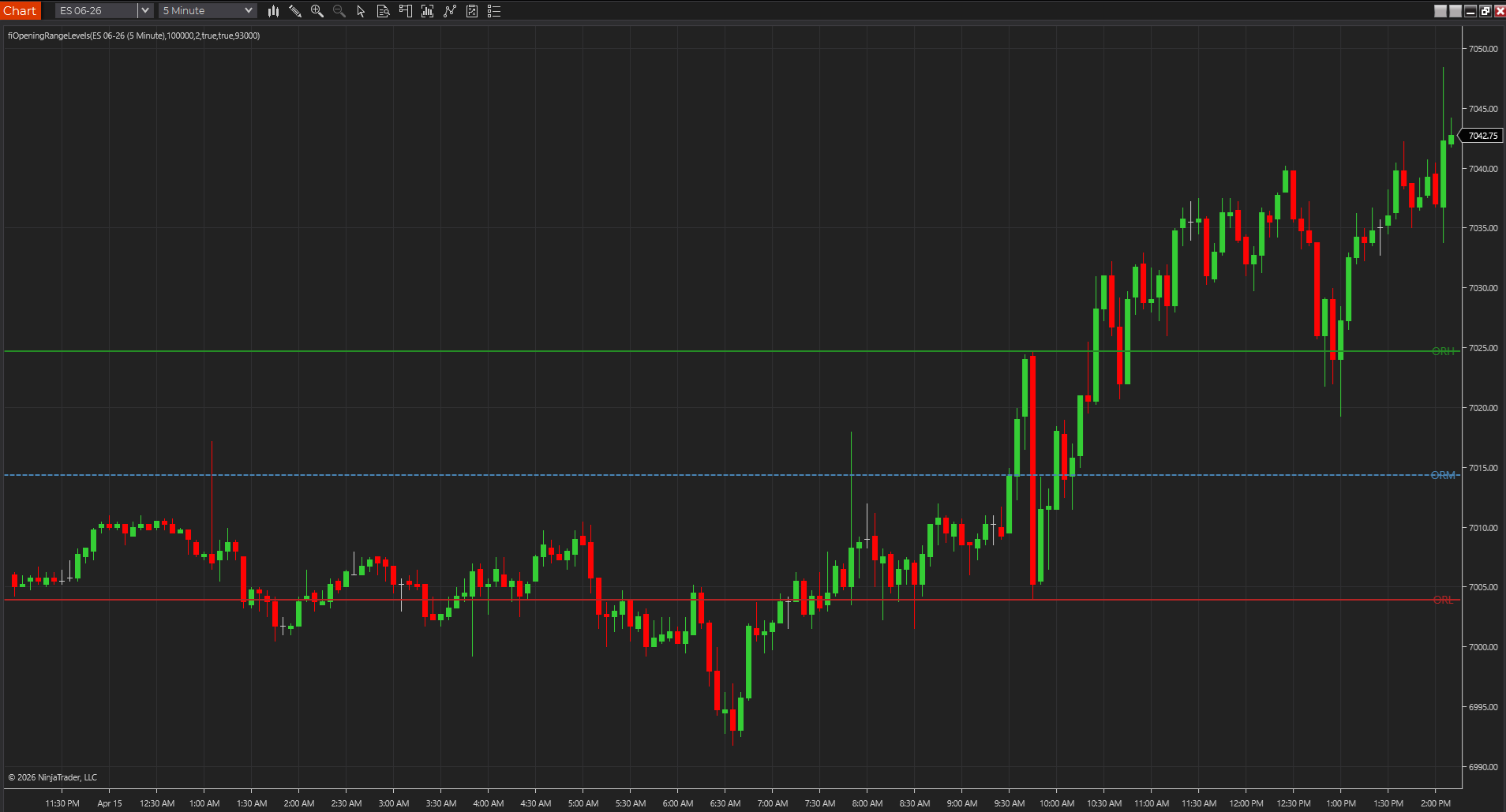
- Scalpers usually care more about what is happening near an opening range edge, prior-session level, or obvious intraday structure zone.
- The closer the trade is to a meaningful location, the more useful a fast participation tool becomes.
- This is why pace tools and level tools work better together than alone.
Keep the chart lightweight
Scalpers need quick reads. A chart covered in wide overlays, too many labels, or multiple similar oscillators usually slows down decision-making rather than helping it.
- One speed or participation tool is usually enough.
- One nearby location map is usually enough.
- If the chart takes longer to scan after adding the indicator, it is probably the wrong fit for scalping.
Use tools that answer scalping-specific questions
Scalpers usually need help with three things: whether the move has real urgency, whether it is happening at a nearby level that matters, and whether the expected stop still makes sense for the current volatility. Good scalping indicators support those questions directly.
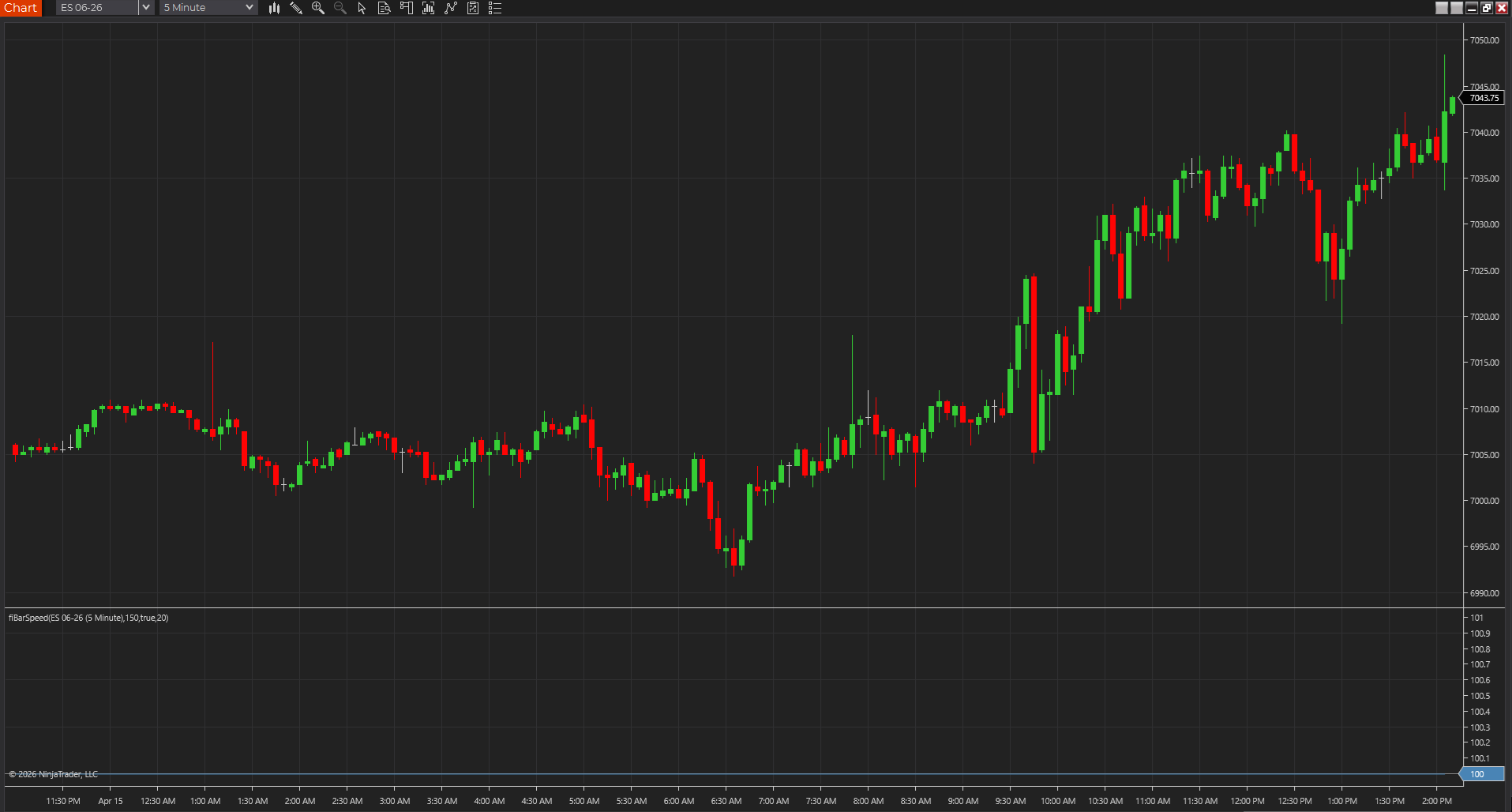
- Bar speed can help with urgency.
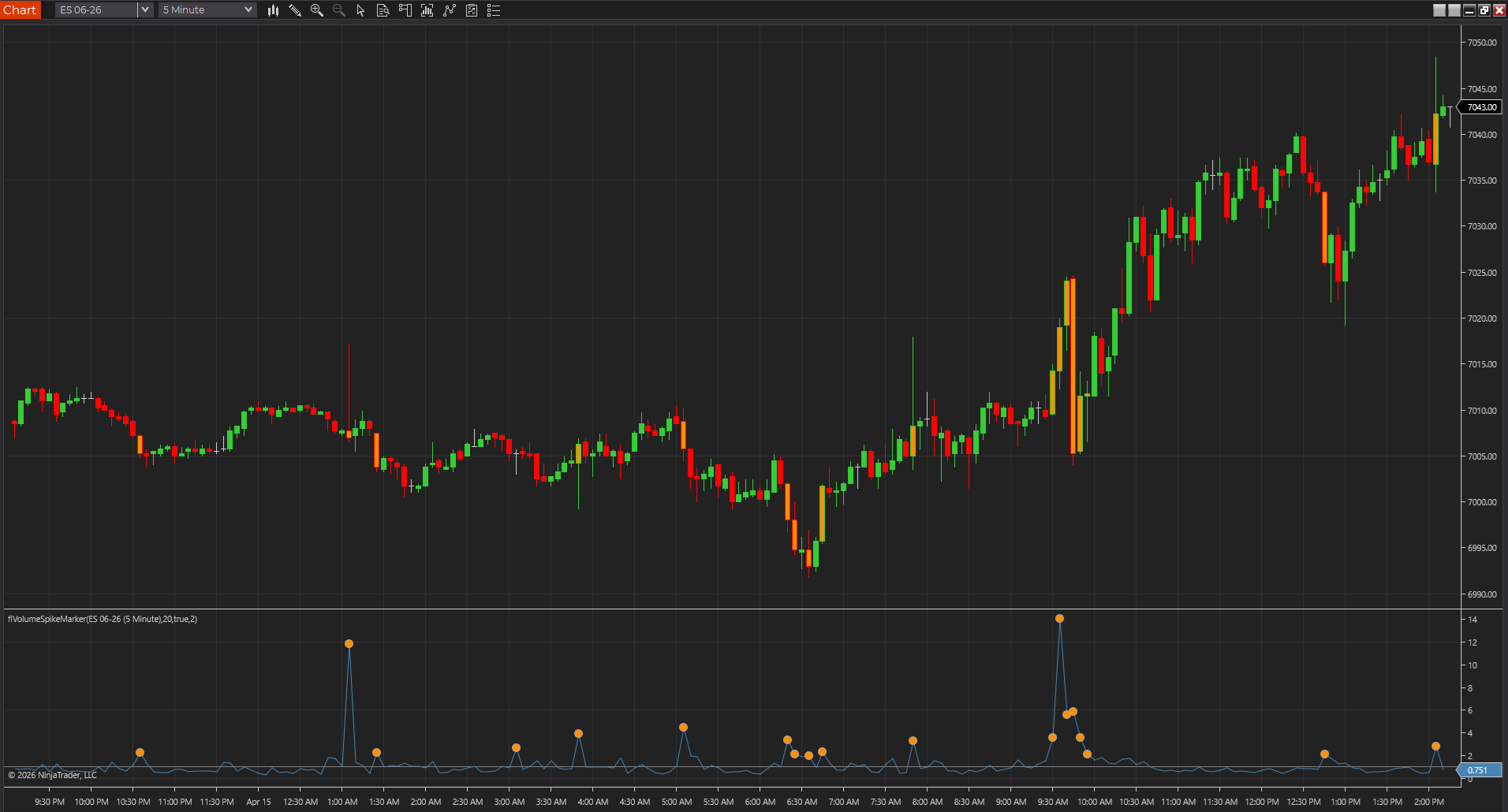
- Volume spikes can help confirm participation.
- Opening range or session levels can keep entries tied to actual structure.
Match the tool to the chart style
Range, tick, and time-based charts do not express urgency in the same way. Test the same study on the chart type you actually trade before trusting the output.
- A tool that feels sharp on a range chart may feel late or noisy on a time-based chart.
- Scalping indicators should be judged inside the exact chart style they are meant to support.
- That quick check often saves traders from blaming the indicator for a chart mismatch.
Scalping still needs discipline, not just speed
The right indicator for scalping should help you read faster without encouraging reckless clicks. If the tool only adds excitement but does not improve location, timing, or risk awareness, it is not helping the workflow enough.
- Fast does not mean useful by default.
- A calmer, clearer read is often better than a more dramatic one.
- The best scalping tools support disciplined speed, not impulsive speed.
Best next reads
These pages pick up the questions most readers usually have next, so you do not have to back out and start a fresh search.
Frequently asked questions
What kinds of indicators help scalpers most?
Usually the ones that clarify pace, participation, and nearby levels. Scalpers benefit more from clean location and urgency tools than from broad slow-moving overlays.
Should a scalping chart use lots of indicators?
Usually no. Scalping works better with a lightweight chart because the setup has to stay readable in a few seconds, not after a long interpretation process.
Are bar speed and volume spike indicators the same thing?
No. They are related, but one measures tempo and the other measures participation. Some scalpers use one as confirmation for the other.