Guide walkthrough
Start reading here
This is the main article body, where the page shifts from summary cards into the actual workflow and decision-making notes.
On this page
Key terms for this guide
These glossary pages cover the ideas and platform language most likely to matter as you work through this guide.
Session levels are close-in references
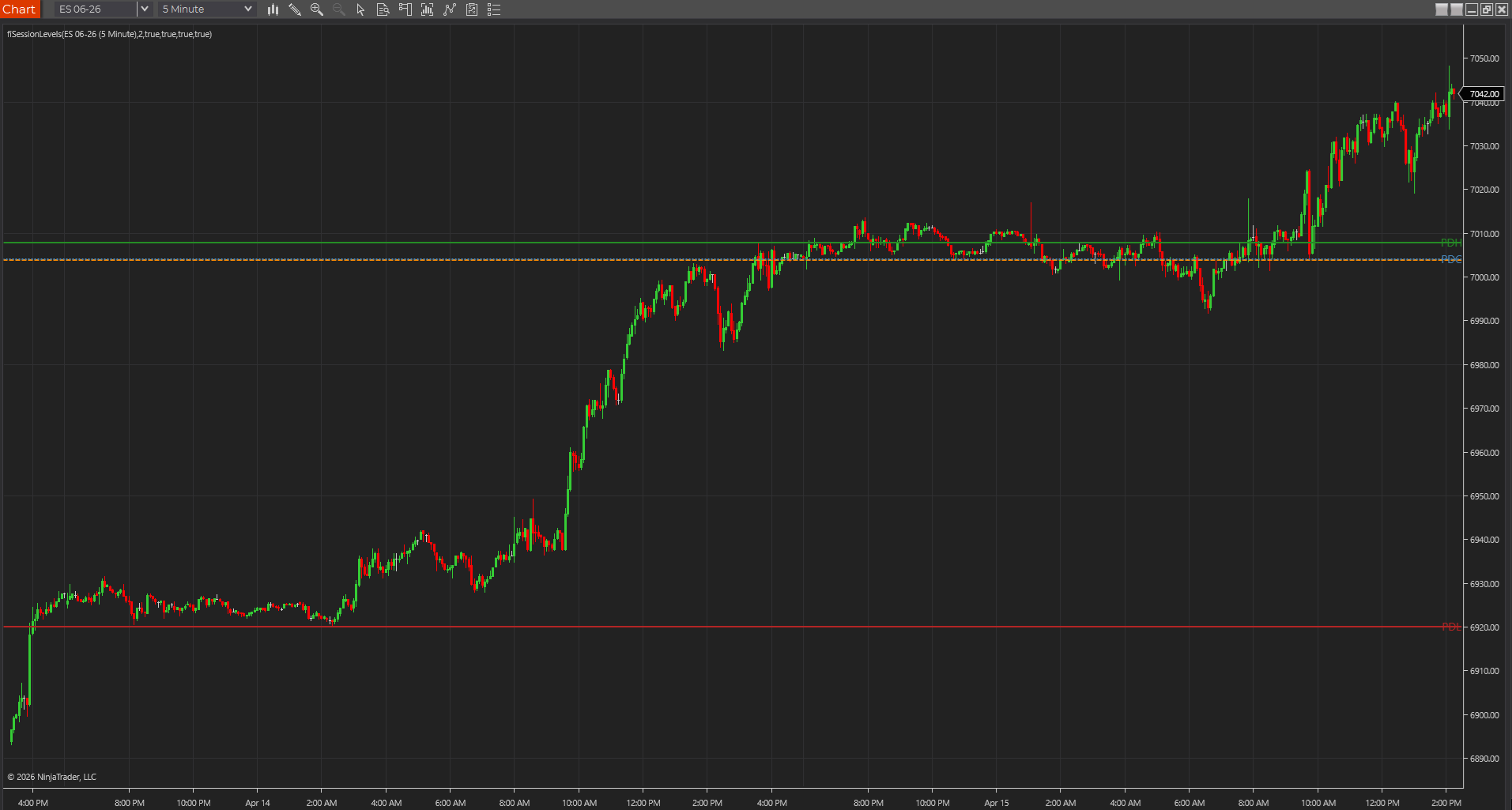
Session highs, lows, opens, and closes are useful for intraday orientation because they track the most recent auction map traders are reacting to today.
- They are often the quickest way to understand where the current session is trading.
- These levels matter most when the day is still negotiating around recent auction references.
- For many intraday charts, session levels are the cleanest first layer.
Higher-time-frame levels widen the lens
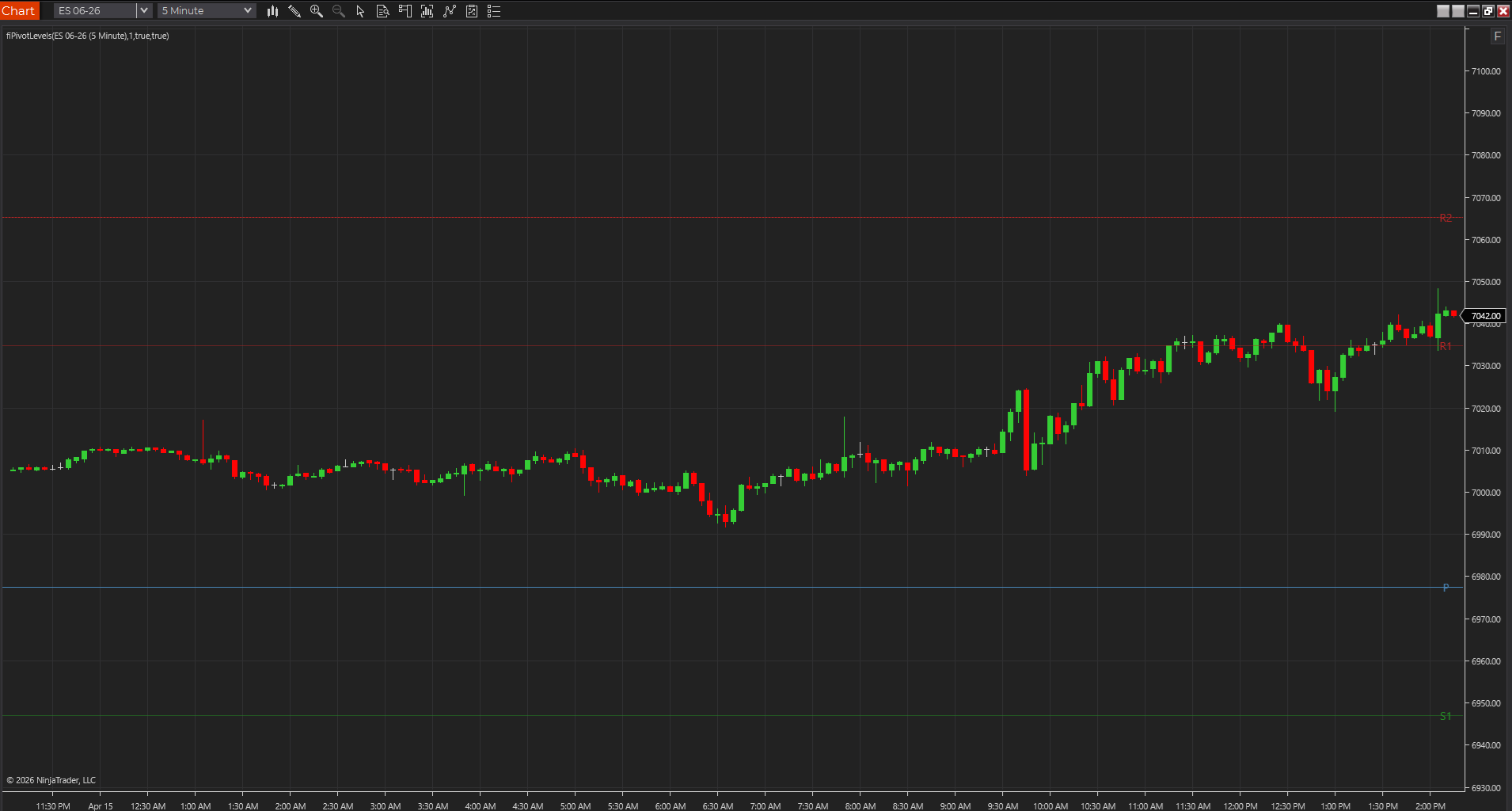
Higher-time-frame levels are more useful when you want to know whether the current intraday move is pushing into a larger daily or weekly reference zone.
- They help explain why a normal intraday move may stall or expand at a bigger location.
- These levels are less about today's small auction details and more about the broader map.
- They often matter most when the market is approaching an obvious daily or weekly decision area.
They solve different location problems
Session levels tell you where the current day is trading. Higher-time-frame levels tell you where that day sits inside the larger map. The mistake is treating them as interchangeable just because both appear as horizontal references.
- Session levels describe the near auction.
- Higher-time-frame levels describe the broader environment.
- A strong chart usually knows which one is supposed to lead the read.
Use both when they answer separate questions
A lot of traders benefit from having both layers, but only if the chart still stays readable. Session levels can frame the immediate day, while daily or weekly levels explain whether the session is pressing into bigger structure.
- Use session levels to manage local decisions.
- Use higher-time-frame levels to rank bigger areas of importance.
- Overlap between the two often deserves more respect than either layer in isolation.
Best next reads
These pages pick up the questions most readers usually have next, so you do not have to back out and start a fresh search.
Frequently asked questions
Which should come first on an intraday chart?
Usually session levels, because they keep the current day readable. Higher-time-frame levels can then be added sparingly as broader anchors.
Are higher-time-frame levels more important than session levels?
Not automatically. They answer different questions. Higher-time-frame levels matter more when the market is pressing into a bigger zone, while session levels matter more for the immediate day-to-day read.
Can both layers be on the same chart?
Yes, but only if the chart still prioritizes the most relevant levels. If every line feels equally important, the stack is too dense.