Guide walkthrough
Start reading here
This is the main article body, where the page shifts from summary cards into the actual workflow and decision-making notes.
On this page
Session references keep traders orientedTemplate choice changes the mapLevels are best when they stay clean
Key terms for this guide
These glossary pages cover the ideas and platform language most likely to matter as you work through this guide.
Session references keep traders oriented
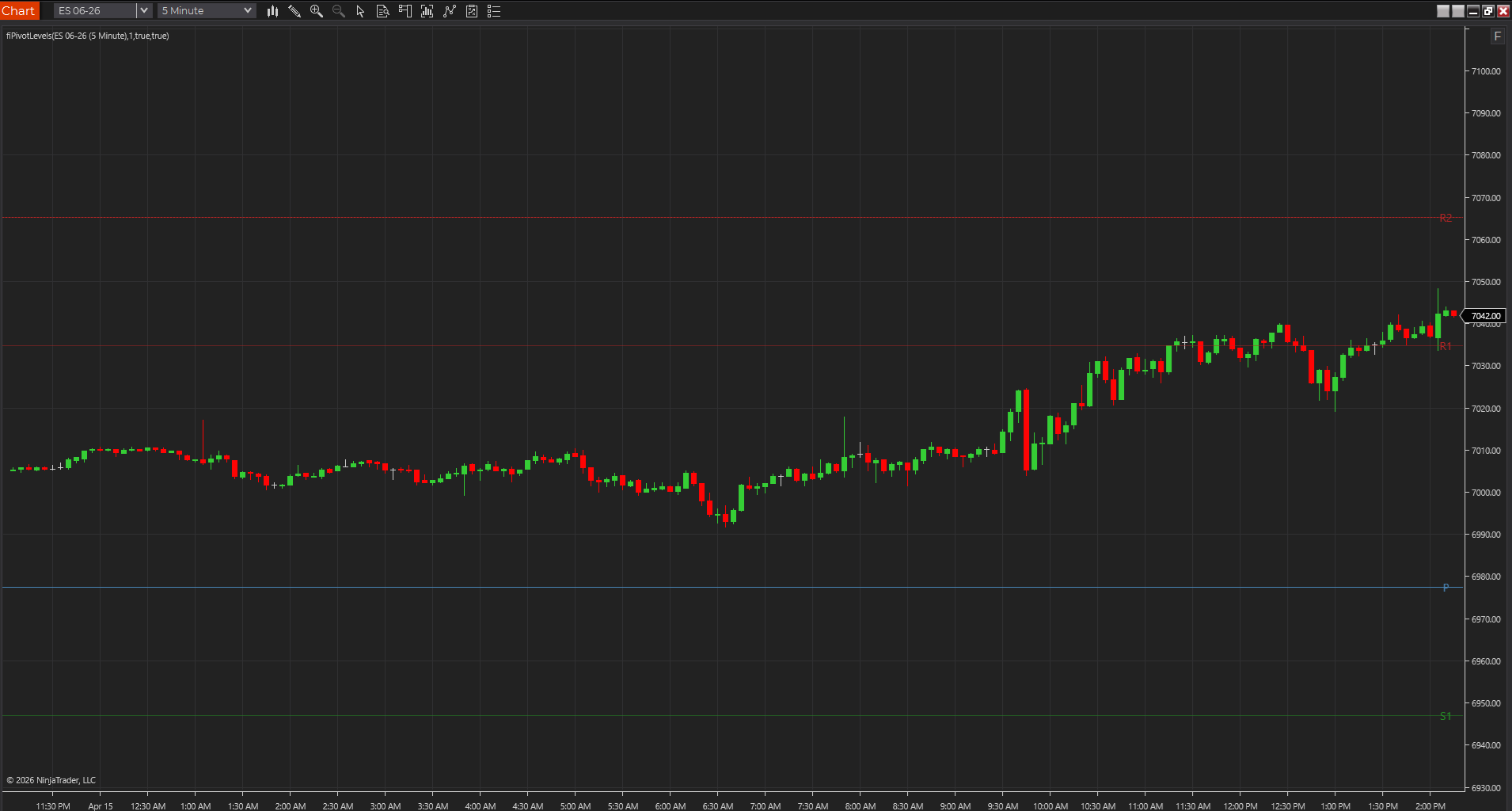
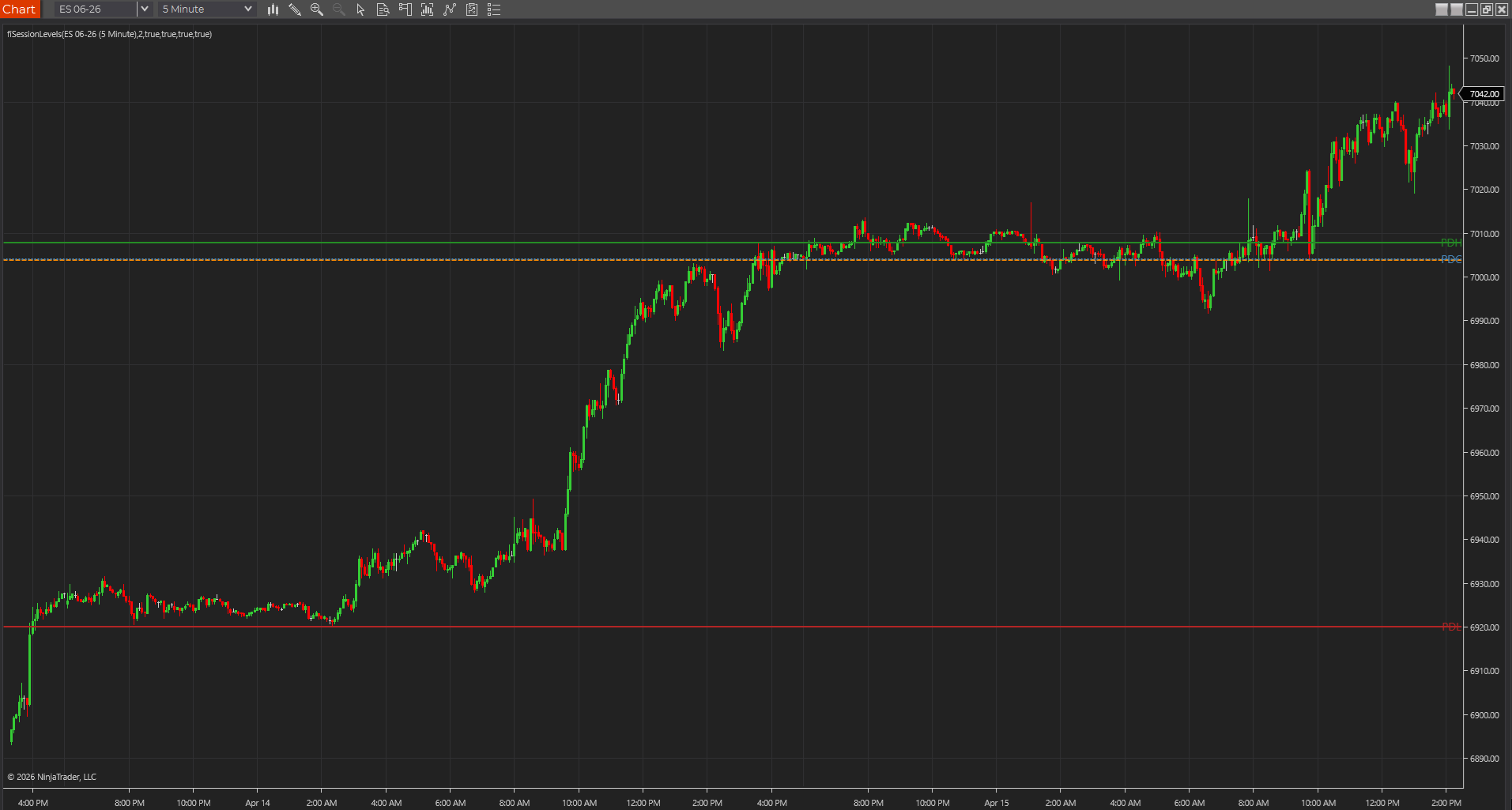
Prior-session highs, lows, opens, and closes give intraday traders a quick map. They help answer whether price is trading inside value, pressing an edge, or reclaiming a prior level.
- They are often the fastest way to make an intraday chart feel organized.
- These raw references are especially useful early in the session.
- They also help keep other indicators grounded in location.
Template choice changes the map
Session templates matter. A chart using regular trading hours will produce different reference levels than one using a wider overnight session.
Levels are best when they stay clean
A good session-level indicator makes the reference obvious without covering the chart in labels. The tool should reduce hesitation, not add another decision layer.
- A clean map is often more valuable than a dense ladder of labels.
- The whole point is faster orientation, not more reading.
- This is what separates a useful level tool from clutter.