Guide walkthrough
Start reading here
This is the main article body, where the page shifts from summary cards into the actual workflow and decision-making notes.
On this page
Key terms for this guide
These glossary pages cover the ideas and platform language most likely to matter as you work through this guide.
Standard VWAP is steadier
A regular session VWAP is useful when you want a stable fair-value reference anchored to the trading session. It reacts to volume naturally, but it does not lean as heavily on the most recent bars, which usually makes it easier to read during rotations and balanced trade.
- This is often the better first choice for day traders who want a calm location reference.
- The line helps answer whether price is trading above, below, or around the session's weighted value.
- When the session is not moving quickly, the steadier read is often an advantage, not a weakness.
Exponential VWAP reacts faster
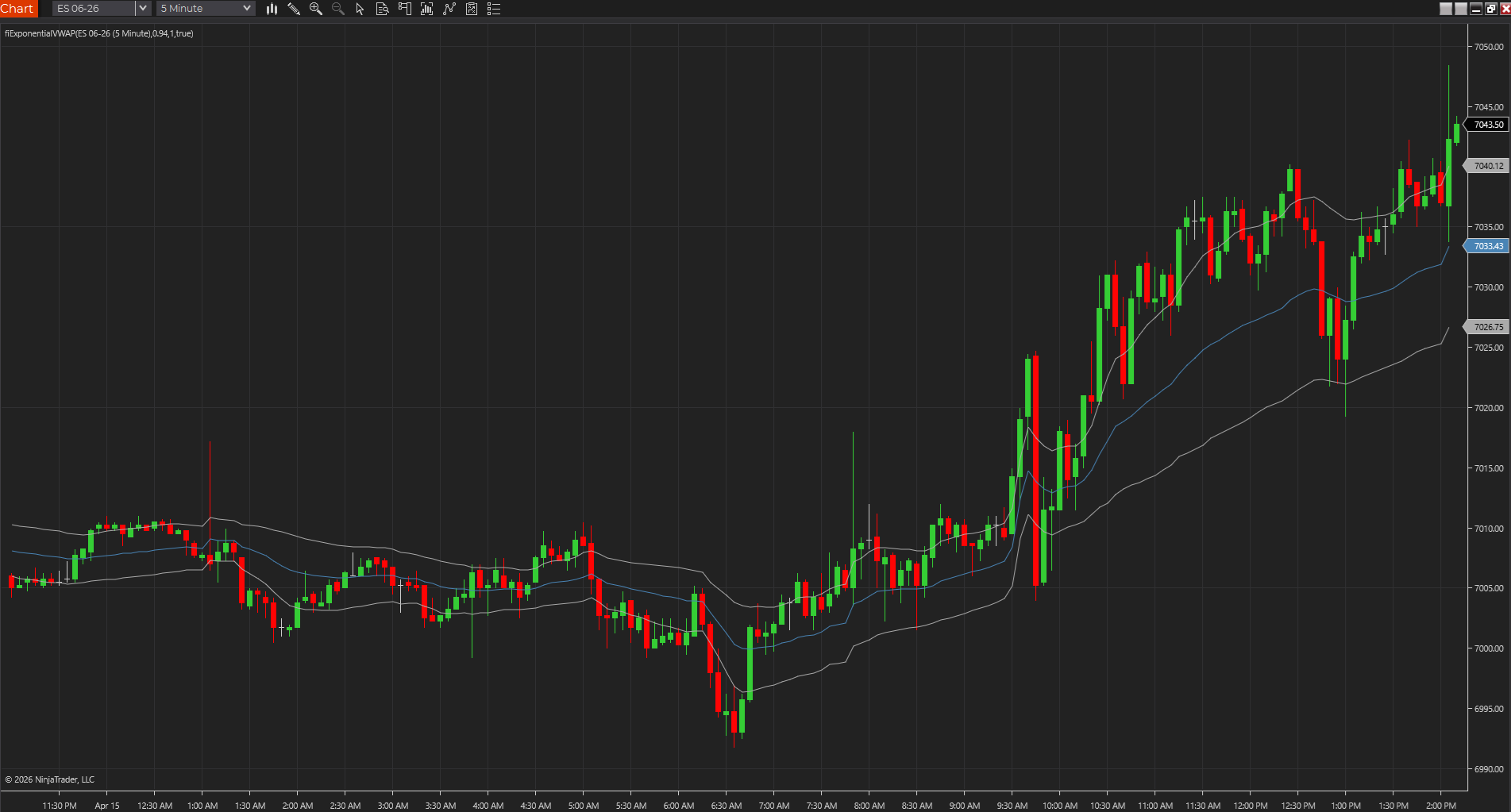
An exponential VWAP-style line puts more emphasis on recent activity. That makes it more useful when intraday conditions are shifting quickly and a standard session VWAP starts to feel late relative to the current push.
- A faster line can help active traders stay aligned with short-term momentum shifts.
- It tends to make more sense on aggressive intraday workflows than on slower mean-reversion reads.
- The benefit is responsiveness, not magical precision.
The tradeoff is more noise
That extra responsiveness also makes the line less calm during rotations. If the market is chopping, an exponential VWAP can pull your attention toward small shifts that do not really matter to the broader session read.
- A fast line is helpful only if the faster information changes your decisions for the better.
- When the line creates more second-guessing than clarity, it is solving the wrong problem.
- That is why many traders still keep standard VWAP as the default reference.
Choose based on the chart question
If the question is where fair value sits for the current session, standard VWAP is usually the cleaner answer. If the question is whether the intraday move is accelerating hard enough to justify a faster reference, exponential VWAP earns a better case.
- Use standard VWAP for steadier session orientation.
- Use exponential VWAP when recent bars should meaningfully carry more weight.
- Do not pick between them based on aesthetics alone.
Pair either version with real location
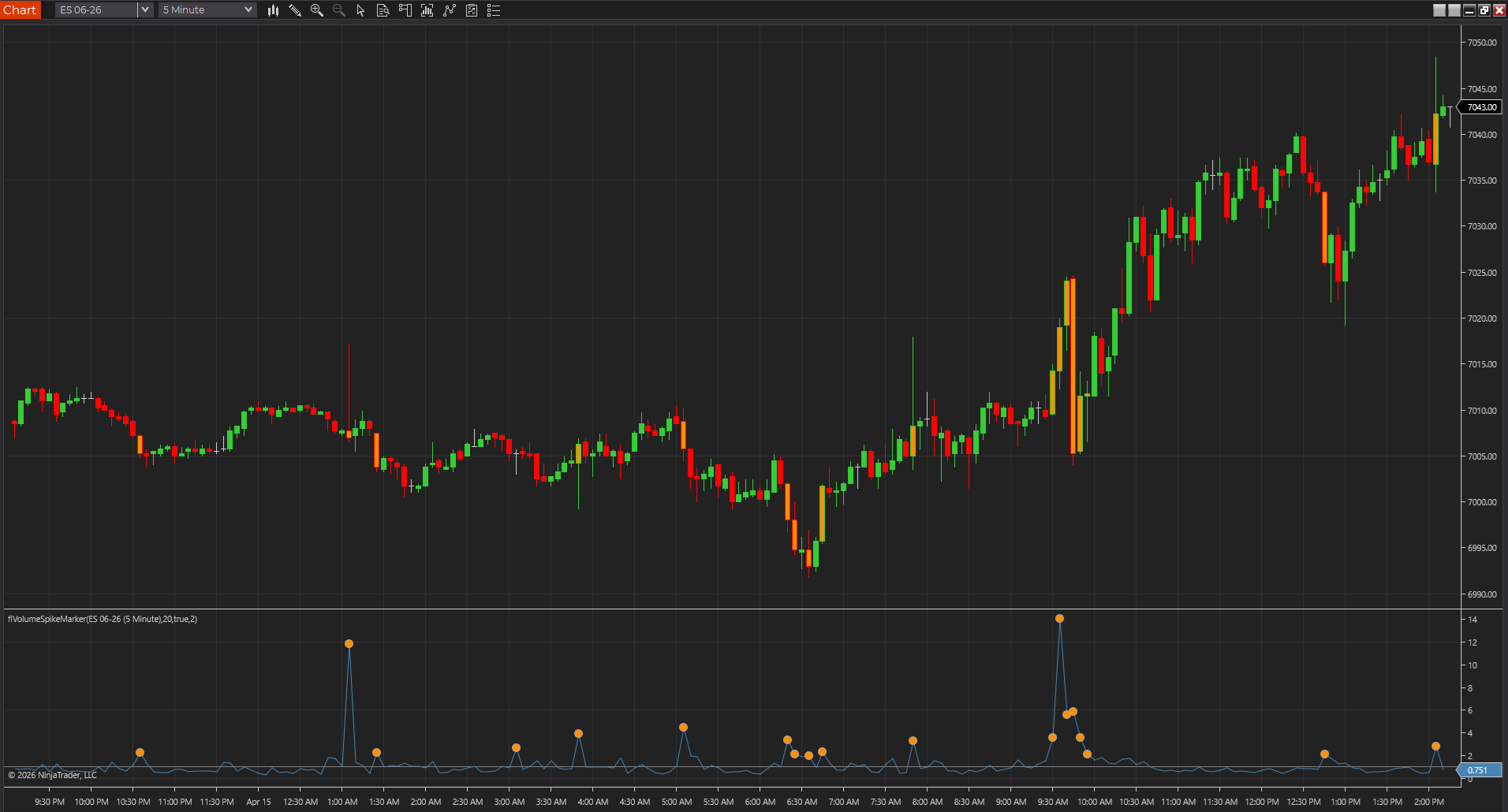
Neither line should be treated as a full workflow by itself. Both become more useful when you can see how the VWAP interaction lines up with opening range, prior-session levels, or participation tools like volume spikes.
- A reclaim into empty space tells a weaker story than a reclaim at meaningful structure.
- Participation can help confirm whether the VWAP interaction deserves attention.
- This is where the broader VWAP guide and product pages become useful.
Best next reads
These pages pick up the questions most readers usually have next, so you do not have to back out and start a fresh search.
Frequently asked questions
Is exponential VWAP better than standard VWAP?
Not automatically. It is faster, which can help in active conditions, but that same speed can make it noisier and less useful in balanced sessions.
What is standard VWAP best for?
It is best for a steadier fair-value read tied to the current session, especially when you want a clean location reference rather than a fast-moving trigger line.
Can both be on the same chart?
Yes, but only when they answer clearly different questions. If both lines need constant explanation, the chart is probably carrying too much.