Guide walkthrough
Start reading here
This is the main article body, where the page shifts from summary cards into the actual workflow and decision-making notes.
On this page
Key terms for this guide
These glossary pages cover the ideas and platform language most likely to matter as you work through this guide.
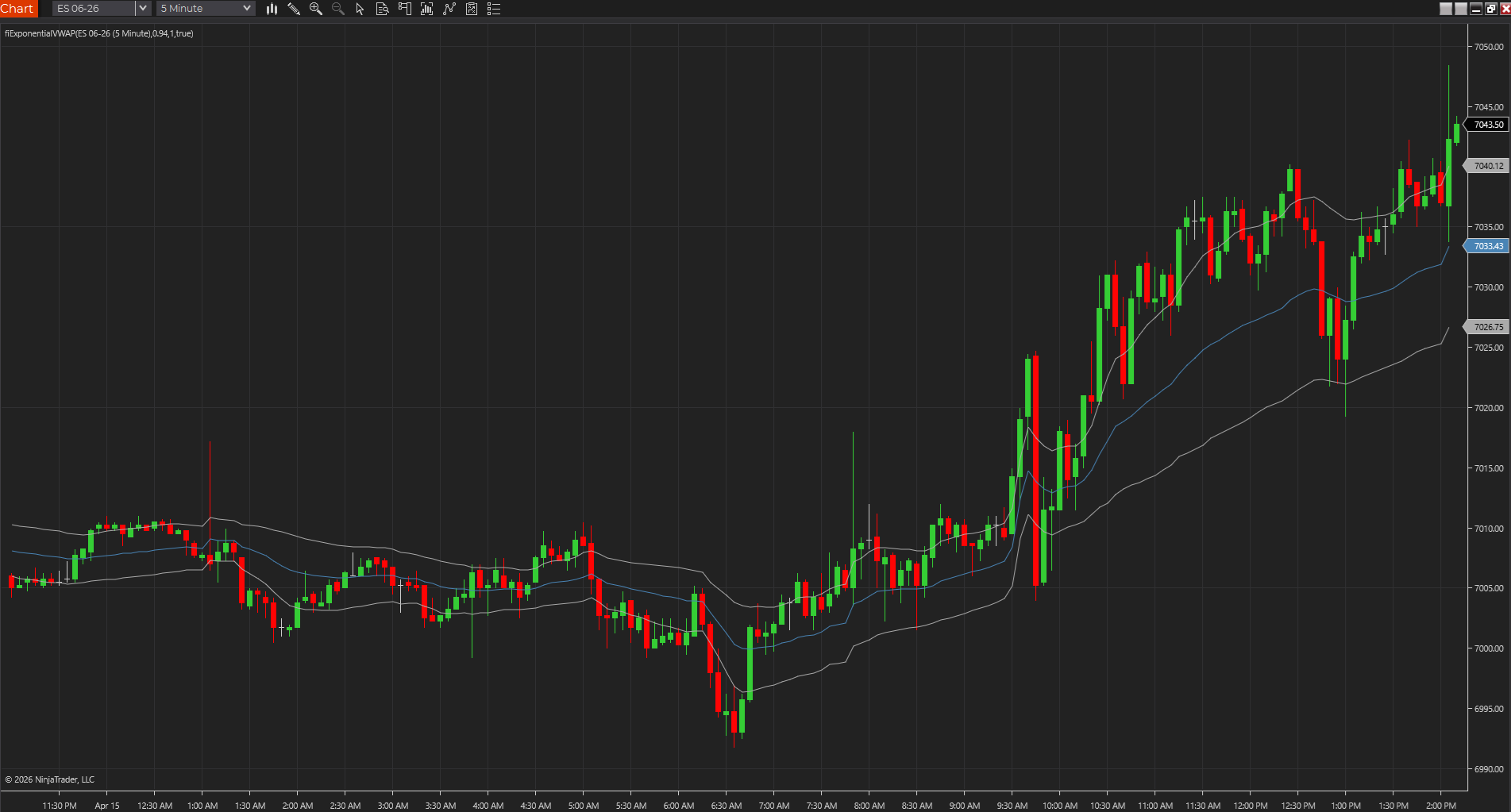
VWAP answers a different question
VWAP is strongest when you want a fair-value style reference tied to participation and session flow. It is usually less about hard horizontal levels and more about where price is trading relative to weighted activity.
- Use it when the question is whether price is trading above, below, or around value.
- VWAP is especially useful when you care about session balance, reclaim behavior, or fair-value rotation.
- It becomes stronger when paired with real chart location instead of treated like a full map by itself.
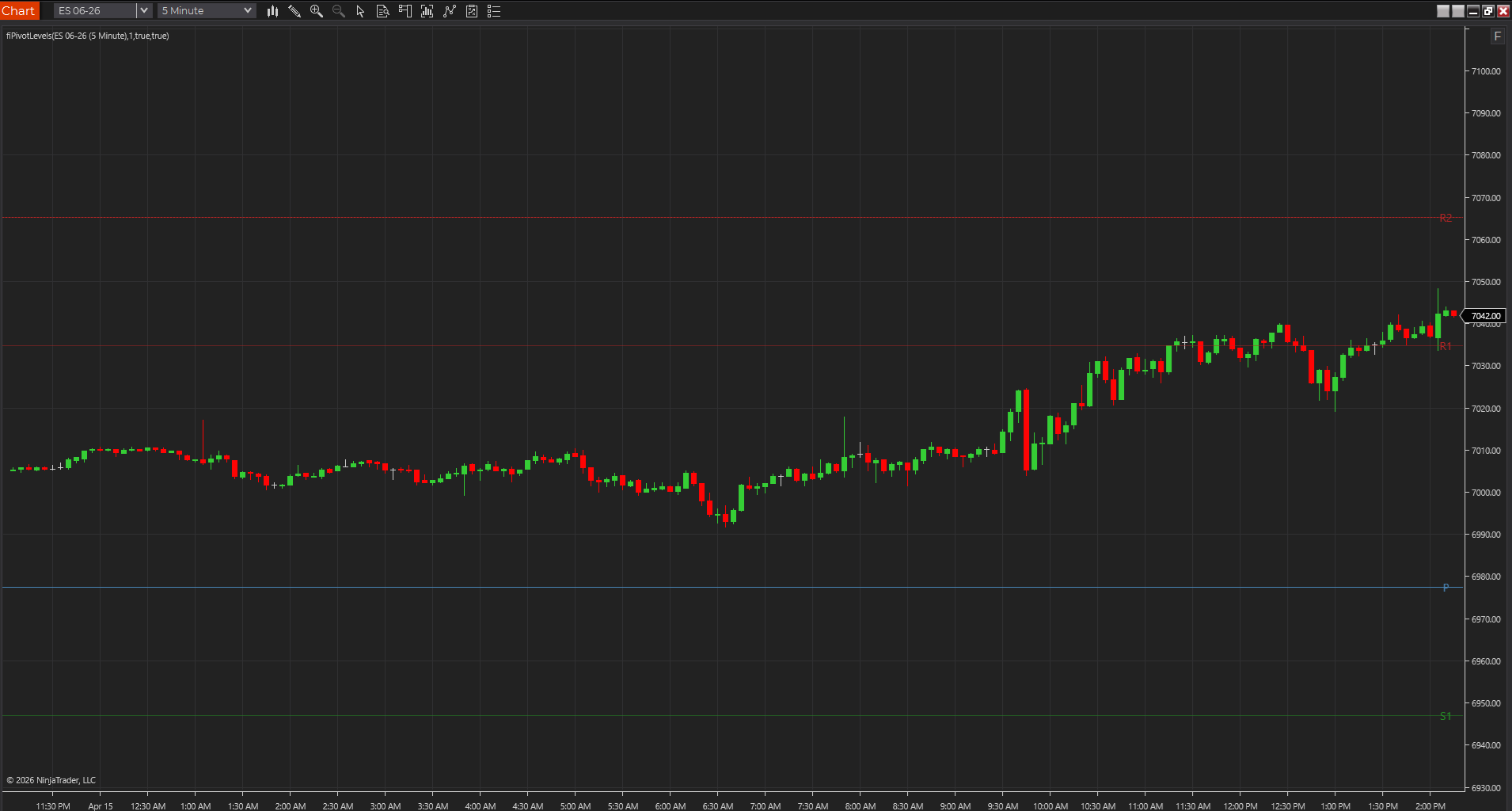
Pivots create a structured ladder
Pivot studies derive levels from prior-session data and give traders an organized support-resistance framework. They are useful when you want repeatable projected levels for the current session.
- This is a better fit when your workflow likes a planned ladder before the day develops.
- Pivots are more framework-driven than VWAP and more derived than raw session references.
- They can help session preparation feel more organized, especially for traders who like mapped levels in advance.
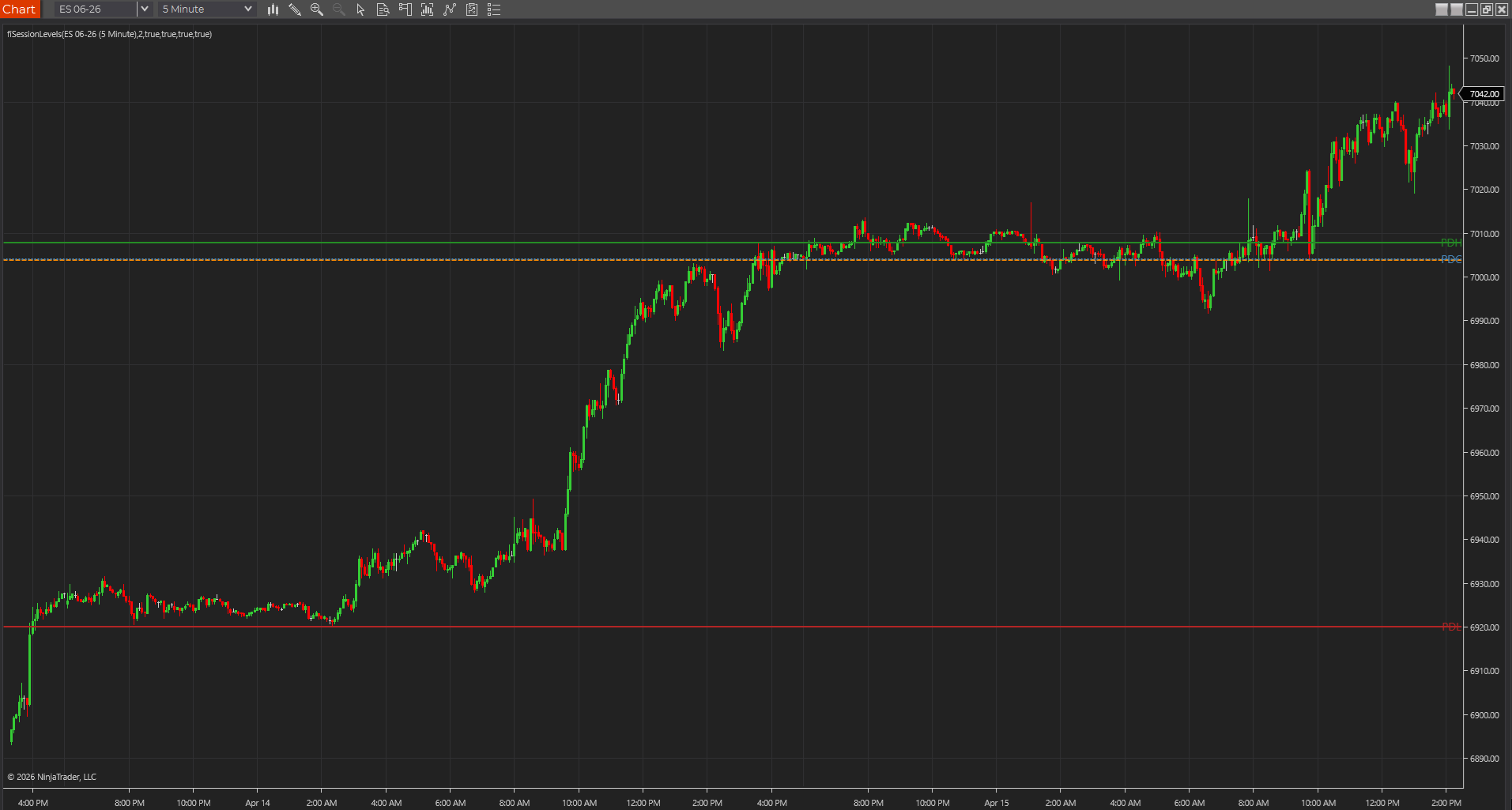
Session levels keep the map literal
Session highs, lows, opens, and closes show the actual auction references from prior trade. Use them when you care more about what price really printed than about a derived framework.
- They are often the easiest map to trust because they are literal.
- Session levels are especially useful when prior highs, lows, or closes still feel active in today's auction.
- If the chart needs cleaner orientation, session levels are often the fastest answer.
Choose the tool that matches the decision
A lot of indicator confusion comes from comparing these tools as if they are competing versions of the same idea. They are not. VWAP is about value, pivots are about projected framework, and session levels are about raw auction references.
- If you want fair value, start with VWAP.
- If you want a planned ladder, start with pivots.
- If you want literal prior-session context, start with session levels.
Use combinations carefully
Many traders do use more than one of these tools, but the combination only helps when each map still has a distinct job. A chart that treats all three as equal usually becomes harder to read instead of easier.
- VWAP plus session levels is often a clean combination because one shows value and the other shows literal structure.
- Pivots can be added when projected levels genuinely improve the session plan.
- If the chart starts needing constant explanation, reduce the stack.
Best next reads
These pages pick up the questions most readers usually have next, so you do not have to back out and start a fresh search.
Frequently asked questions
Which is best for new traders: VWAP, pivots, or session levels?
Session levels are usually the easiest to read first because they are literal references. VWAP is also approachable if the trader specifically wants a fair-value framework.
Can VWAP replace pivots or session levels?
Not really. VWAP answers a different question. It is about weighted value, not a projected ladder or a literal prior-session map.
Is it okay to use all three on one chart?
Sometimes, but only when each one still has a clear job. If all three are competing for the same decision, the chart is probably overbuilt.