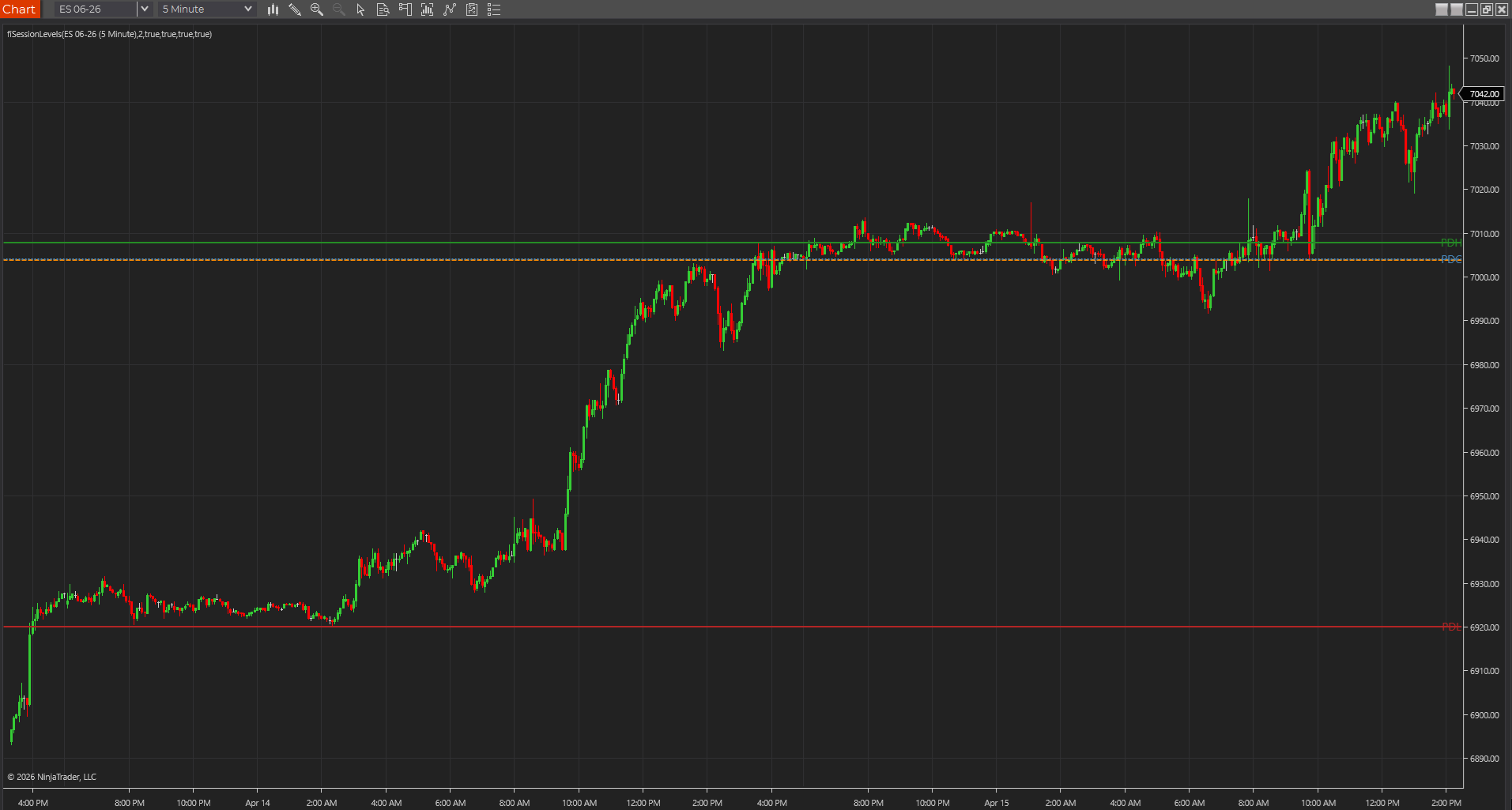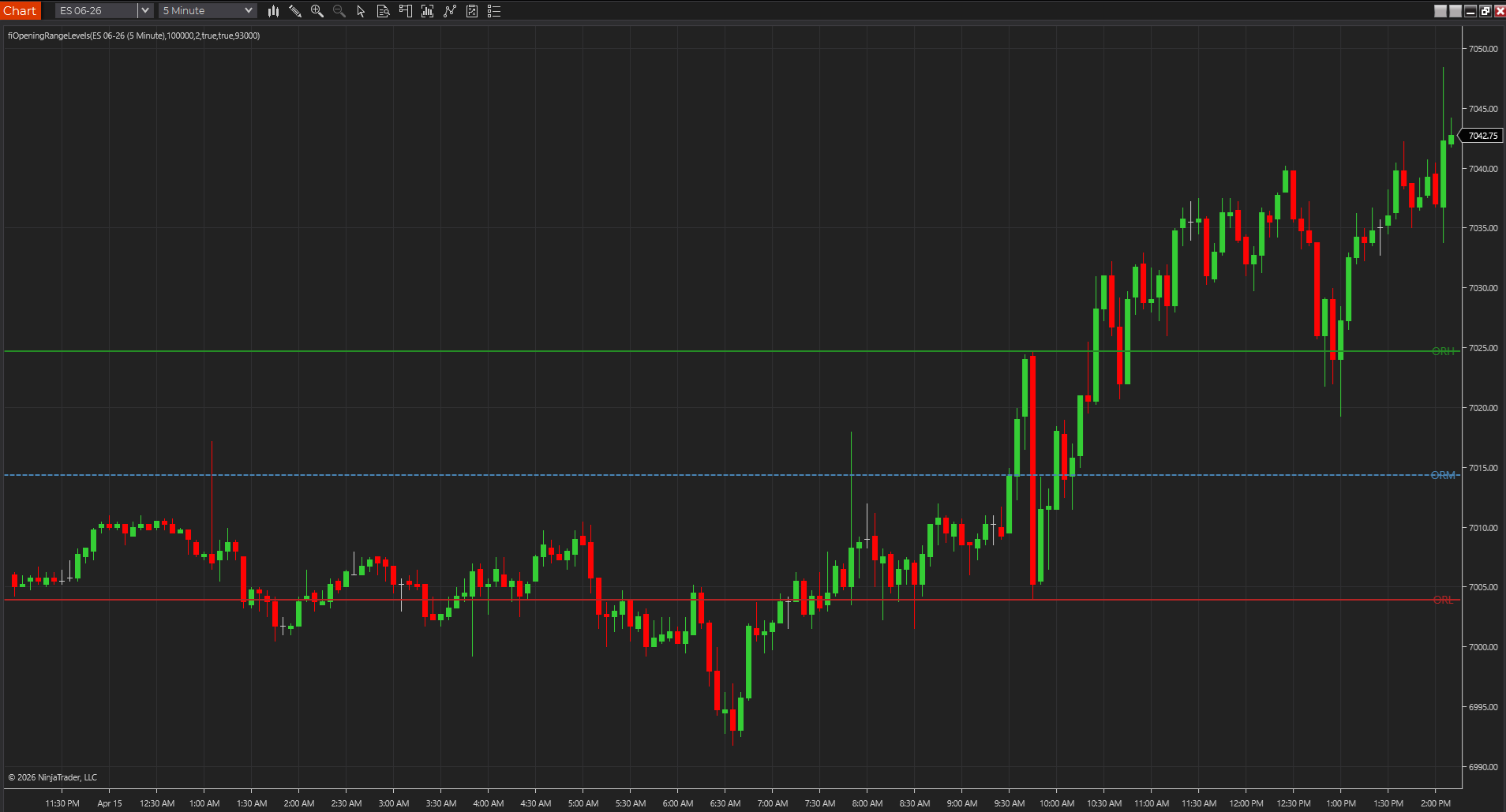
Guide walkthrough
Start reading here
This is the main article body, where the page shifts from summary cards into the actual workflow and decision-making notes.
On this page
Key terms for this guide
These glossary pages cover the ideas and platform language most likely to matter as you work through this guide.
Session handling matters first
An opening range indicator is only as useful as its session definition. Futures, equities, and extended-hours charts can all create different opening windows and very different signals.
- The opening window must match the session you actually care about.
- RTH and extended-hours charts often produce different ranges.
- If the session definition is off, the rest of the logic is off too.
Use the range as context
Opening range highs, lows, and midpoints are reference levels. They get more useful when paired with volume, speed, or broader session context instead of being treated like automatic entries.
Know when the range is locked
Some tools keep updating until the range window closes. Others mark only the completed range. Make sure you know which behavior your chart is showing.
- A moving range and a completed range support different decisions.
- This matters most around the open when traders are acting fast.
- Good documentation should make that behavior obvious.