Guide walkthrough
Start reading here
This is the main article body, where the page shifts from summary cards into the actual workflow and decision-making notes.
On this page
Key terms for this guide
These glossary pages cover the ideas and platform language most likely to matter as you work through this guide.
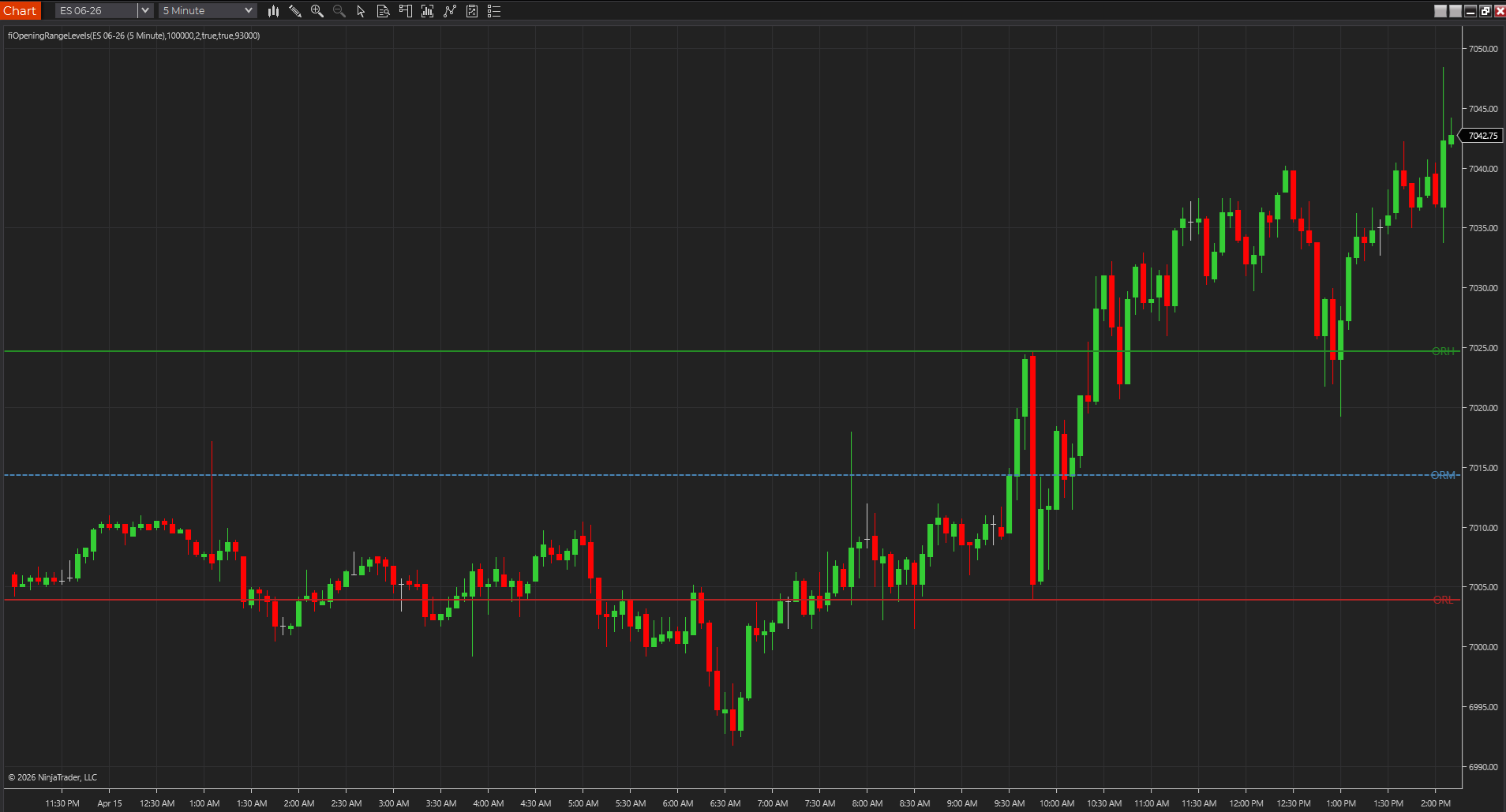
Opening range is session-specific
Opening range tools care about a defined early-session window. They are useful when the first few minutes of trade set the tone and you want levels tied directly to that opening auction.
- The range only makes sense if the session open matters to your workflow.
- It is especially useful for traders who frame the day around the first clean expansion after the bell.
- Once the range is set, it becomes a stable map for the rest of the session.
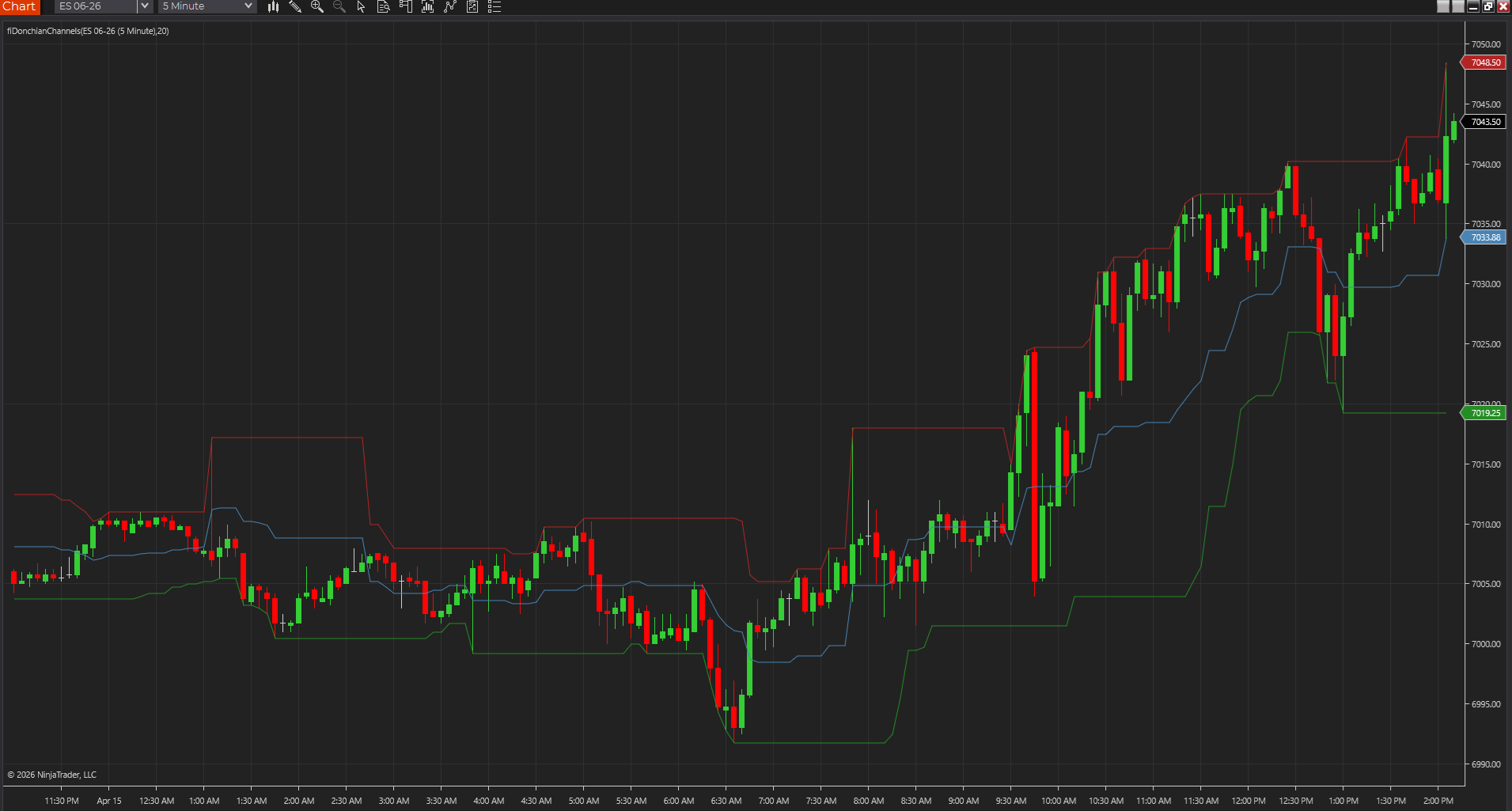
Donchian channels are rolling structure
Donchian channels track the recent high-low envelope over a lookback period. They are better when you want breakout context that keeps adapting as the session develops instead of staying anchored to the open.
- The channel updates as the lookback shifts, which keeps the structure current.
- That makes it useful for traders who care about breakout pressure all day, not just at the open.
- The tradeoff is that the map is less stable because the structure keeps moving.
The lines solve different breakout problems
Opening range levels ask whether price is breaking away from the opening auction. Donchian channels ask whether price is pushing beyond recent structure right now. Those are related questions, but not the same one.
- Opening range helps with session narrative.
- Donchian helps with ongoing breakout framing.
- Confusion usually starts when traders expect one tool to do both jobs equally well.
Opening range is calmer, Donchian is more adaptive
An opening range gives you a fixed reference once the measurement window ends. Donchian channels keep evolving. That means opening range is usually easier to hold in your head, while Donchian can stay more relevant later in the day.
- Fixed levels are often easier to use under pressure.
- Adaptive channels can catch later-session breakout structure better.
- Which one feels better depends on whether you value stability or responsiveness more.
Choose based on the question you are asking
If you care most about the opening drive, use an opening range tool first. If you care more about whether price is expanding beyond recent structure at any point in the session, Donchian channels are usually the better fit.
- Use opening range when the open organizes the session.
- Use Donchian when you want a rolling breakout map that stays alive after the first hour.
- Use both only when each one clearly adds something different.
Frequently asked questions
Which is better for the first move after the bell?
Opening range is usually better because it is built specifically around the opening auction and the first expansion away from it.
Which is better for later-session breakouts?
Donchian channels are usually better because the channel keeps updating with recent structure as the session develops.
Can traders use both together?
Yes, but only if the opening range is serving as the session-open map and the Donchian channel is serving as the rolling structure map. Otherwise the chart can become repetitive.