Guide walkthrough
Start reading here
This is the main article body, where the page shifts from summary cards into the actual workflow and decision-making notes.
On this page
Key terms for this guide
These glossary pages cover the ideas and platform language most likely to matter as you work through this guide.
ATR stop tools frame breathing room
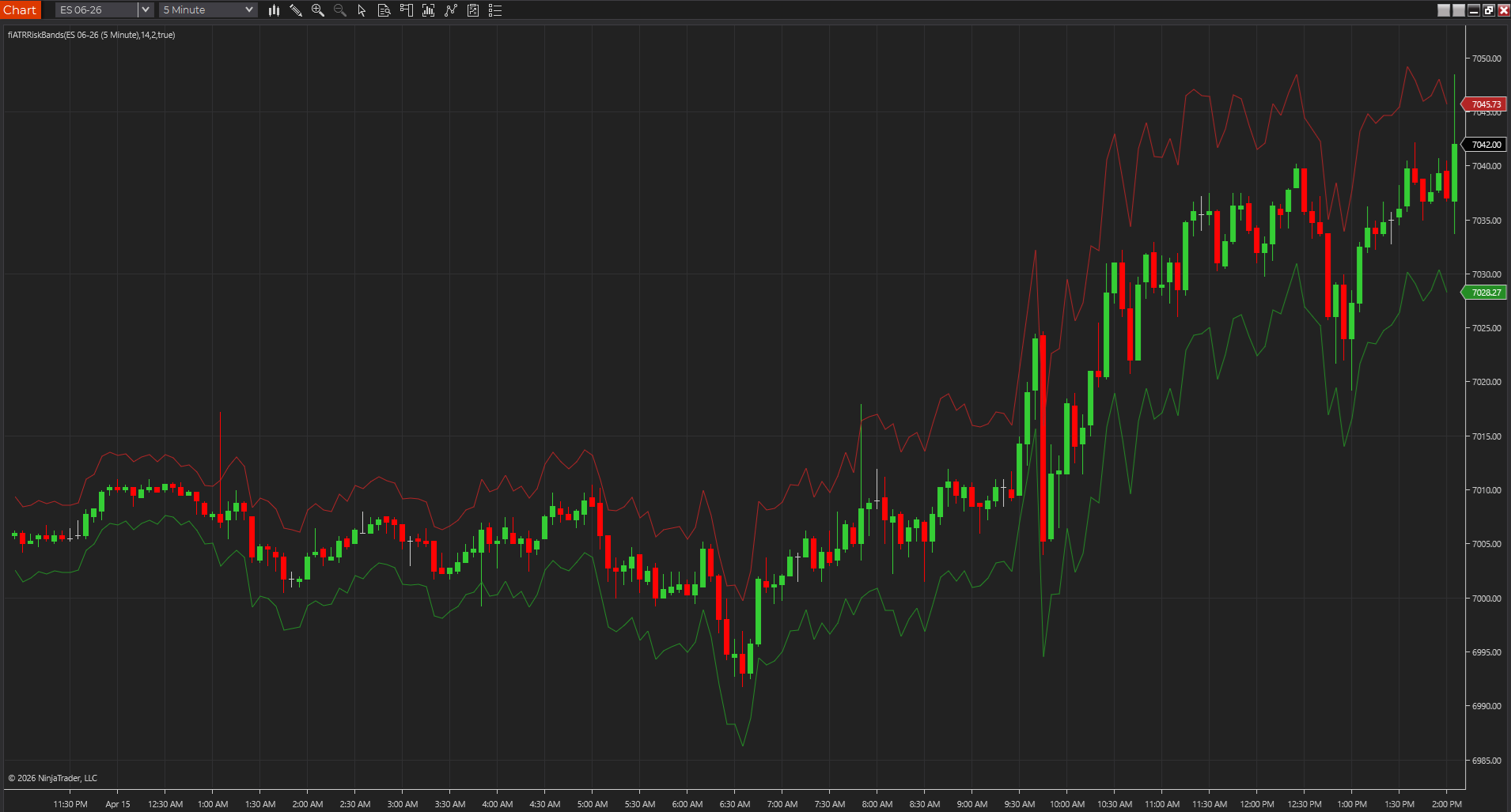
ATR-based stop overlays are useful when you care about volatility-adjusted distance. They help traders think in terms of how much room price has been using recently instead of placing stops wherever the chart feels comfortable.
- ATR tools are strongest when the risk question is more important than the trend-label question.
- They help anchor stop placement and trade expectations to current conditions.
- That makes them especially useful for traders whose entries are fine but whose exits drift.
Trend ribbons frame alignment
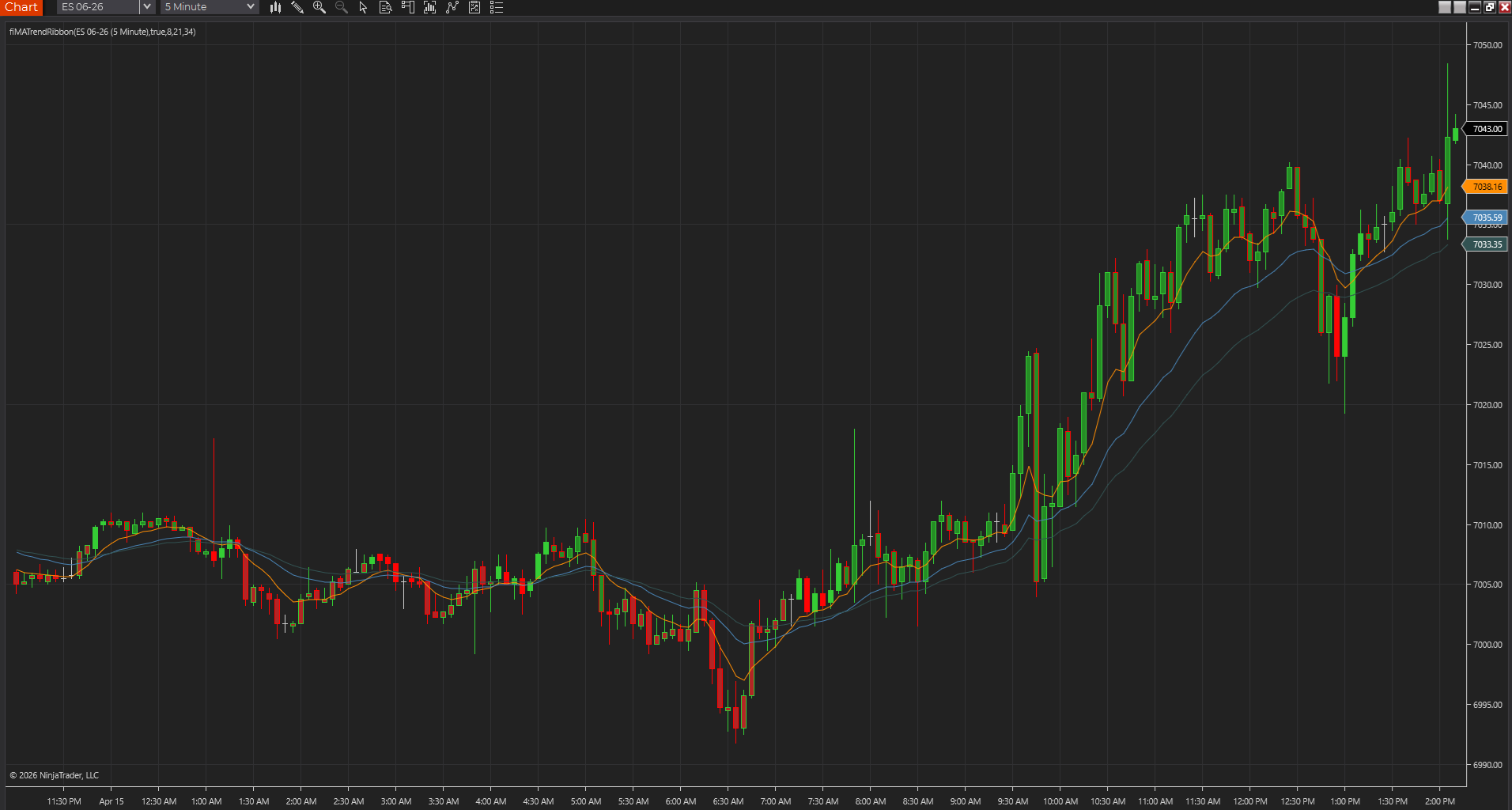
A moving-average ribbon is usually better when you want a quick read on trend agreement, slope, and whether pullbacks are happening inside a larger directional state.
- Ribbons are less about exact stop distance and more about directional organization.
- They help answer whether the chart is trending cleanly enough to stay with the move.
- That makes them useful as a bias filter or trend-state overlay.
They solve different workflow problems
An ATR trailing stop and a trend ribbon can both sit on price, but they are not trying to answer the same question. One is about how much room the market is using. The other is about whether the market still looks directionally aligned.
- A ribbon can look bullish while ATR still warns that your stop placement is too optimistic.
- An ATR stop can feel reasonable even when the ribbon shows the trend is no longer clean.
- That difference is why many traders find them complementary.
They are not redundant
One is more about distance and risk context. The other is more about directional organization. Many traders use a ribbon to describe trend and an ATR stop to describe risk.
- Use the ribbon when you need directional structure.
- Use ATR when you need volatility-aware breathing room.
- Use both when trend and risk both need to stay visible on the same chart.
Best next reads
These pages pick up the questions most readers usually have next, so you do not have to back out and start a fresh search.
Frequently asked questions
Which is better for stop placement?
ATR-based tools are usually better because they are built around recent volatility and distance rather than trend appearance.
Which is better for a quick trend read?
A trend ribbon is usually better because it keeps slope, alignment, and pullback context visible in a simpler directional format.
Should both be on the chart?
Often yes, if one is handling trend context and the other is handling risk. If they create too much visual overlap, keep the one that answers the more important decision.