What it does
EMA Pullback Zone gives traders a simple two-line trend area that is easier to use than a larger ribbon when the question is just whether price is pulling back into a moving-average zone. It works best as a trend-context tool, not as a stand-alone signal.
Who this is for
This page is a good fit for traders who want a readable EMA Pullback Zone workflow without having to reverse-engineer the setup from forum posts or screenshots.
Key terms for this tool
Review the core trading and platform terms tied to this page before changing settings or using the study in a live workspace.
What it is not
EMA Pullback Zone is a chart-context tool. It does not place trades, manage risk automatically, or promise that a specific pattern will resolve in one direction. Use it to organize decisions, not to outsource them.
Chart examples
This chart capture shows the study on a real NinjaTrader workspace. Use it as visual reference, then confirm behavior on your own instrument, session, and timeframe.
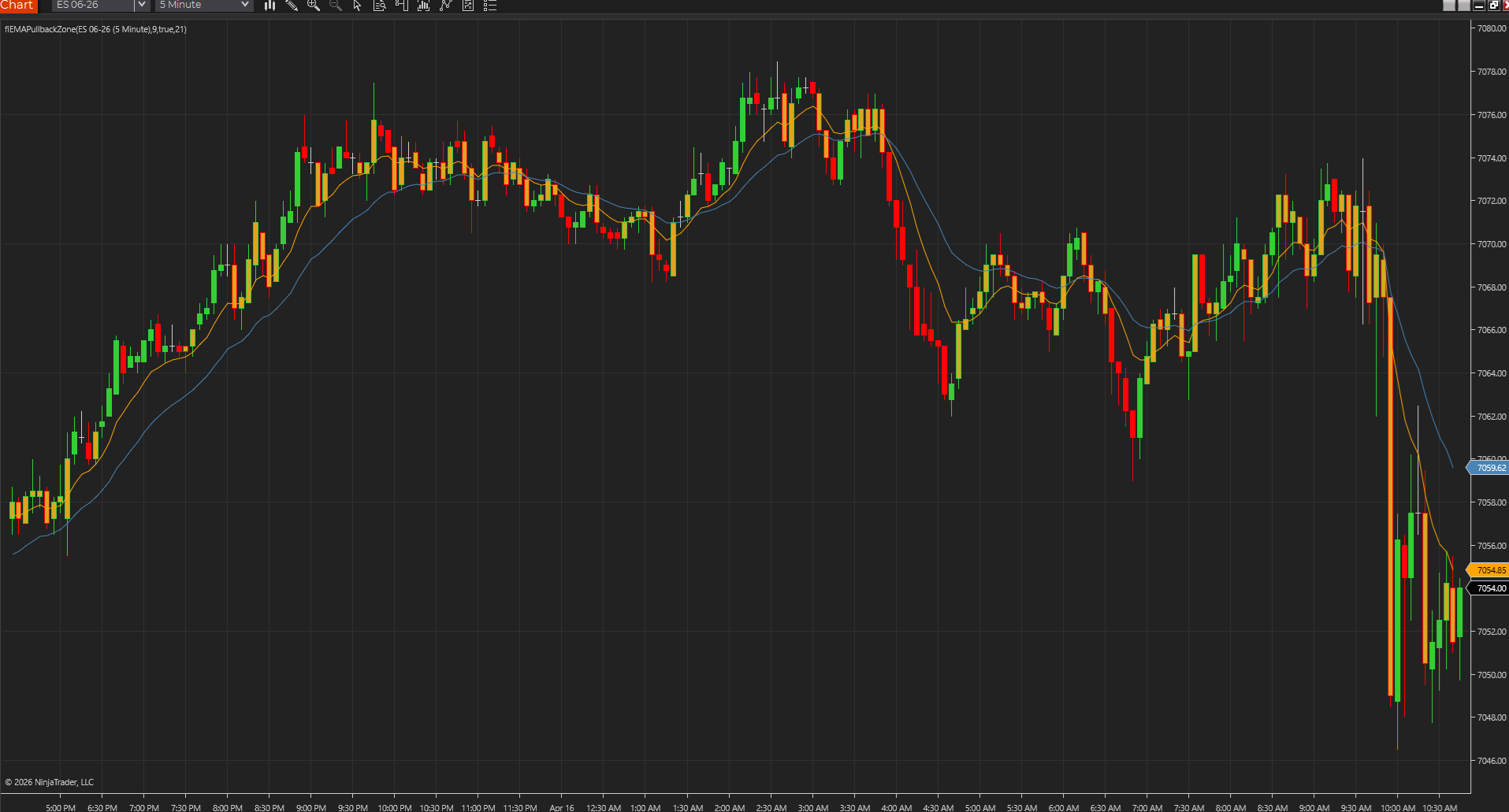
Pullback zone on chart
A chart showing EMA Pullback Zone keeping the trend retracement area visible during directional movement.
Best fit
- Watching pullbacks in trending markets.
- Keeping a compact EMA zone on screen without a larger ribbon.
- Reviewing whether trend continuations are respecting the moving-average area.
Before using it live
- Import the NinjaTrader 8 ZIP through NinjaTrader's normal import flow.
- Start with the default fast and slow EMA lengths before changing them.
- Use it on a clean chart so touches into the zone are easy to review.
- Review how the tool behaves on your actual session template, chart type, and instrument.
Settings to review
Controls the faster EMA that defines one side of the zone.
Controls the slower EMA that defines the other side of the zone.
Optionally colors bars that trade into the EMA zone.
Installation notes
- Import the NinjaTrader 8 ZIP through NinjaTrader's normal import flow.
- Start with the default fast and slow EMA lengths before changing them.
- Use it on a clean chart so touches into the zone are easy to review.
Downloads
Source code
These source examples are provided for copy/paste workflows on other charting platforms. Review and test any script in a simulator before using it on a live chart.
{
  EMA Pullback Zone
  FreeIndicators.com source example.
  Works as a starting point for TradeStation EasyLanguage and MultiCharts PowerLanguage.
}

Inputs: FastLength(9), SlowLength(21);
Vars: FastEMA(0), SlowEMA(0);

FastEMA = XAverage(Close, FastLength);
SlowEMA = XAverage(Close, SlowLength);

Plot1(FastEMA, "FastEMA");
Plot2(SlowEMA, "SlowEMA");// EMA Pullback Zone
// FreeIndicators.com source example for MetaTrader 4.
#property indicator_chart_window
#property indicator_buffers 3
#property indicator_color1 DodgerBlue
#property indicator_color2 Crimson
#property indicator_color3 SeaGreen
double Buffer1[];
double Buffer2[];
double Buffer3[];
int init() {
SetIndexBuffer(0, Buffer1);
SetIndexBuffer(1, Buffer2);
SetIndexBuffer(2, Buffer3);
return(0);
}
int start() {
int counted = IndicatorCounted();
int limit = Bars - counted - 1;
int fast = 9, slow = 21;
for(int i = limit; i >= 0; i--) {
Buffer1[i] = iMA(NULL, 0, fast, 0, MODE_EMA, PRICE_CLOSE, i);
Buffer2[i] = iMA(NULL, 0, slow, 0, MODE_EMA, PRICE_CLOSE, i);
}
return(0);
}// EMA Pullback Zone
// FreeIndicators.com source example for MetaTrader 5.
#property indicator_chart_window
#property indicator_buffers 3
#property indicator_plots 3
double Buffer1[];
double Buffer2[];
double Buffer3[];
int OnInit() {
SetIndexBuffer(0, Buffer1, INDICATOR_DATA);
SetIndexBuffer(1, Buffer2, INDICATOR_DATA);
SetIndexBuffer(2, Buffer3, INDICATOR_DATA);
return(INIT_SUCCEEDED);
}
int OnCalculate(const int rates_total,
const int prev_calculated,
const datetime &time[],
const double &open[],
const double &high[],
const double &low[],
const double &close[],
const long &tick_volume[],
const long &volume[],
const int &spread[]) {
int start = prev_calculated > 1 ? prev_calculated - 1 : 1;
int fast = 9, slow = 21;
for(int i = start; i < rates_total; i++) {
Buffer1[i] = iMA(_Symbol, PERIOD_CURRENT, fast, 0, MODE_EMA, PRICE_CLOSE);
Buffer2[i] = iMA(_Symbol, PERIOD_CURRENT, slow, 0, MODE_EMA, PRICE_CLOSE);
}
return(rates_total);
}//@version=5
indicator("EMA Pullback Zone", overlay=true)
fastLength = input.int(9, "Fast EMA")
slowLength = input.int(21, "Slow EMA")
fast = ta.ema(close, fastLength)
slow = ta.ema(close, slowLength)
plot(fast, "Fast EMA", color=color.orange)
plot(slow, "Slow EMA", color=color.blue)After the download
Keep the next step tied to this exact tool
Install it cleanly, review the setup notes, or move straight into a structured request if the tool needs another platform or a custom version.
Install guide
Keep the workspace stable
Use the clean import flow before a promising download turns into a platform cleanup project.
Open install guideCustom NT8 work
Turn this into a custom NinjaTrader build
Use Moore Tech when the free indicator needs a private modification, NT8 repair, platform port, alert upgrade, or strategy version built around your exact rules.
Free next step
Turn the download into a session plan
Use the free session-planning guide when you want the key levels, scenarios, and invalidation points mapped before the session instead of building the day from scratch.
Open session guideLimitations
- EMAs still lag price.
- Sideways markets can create repeated low-quality touches.
- A zone touch does not define entry timing or stop placement by itself.
Frequently asked questions
Does it repaint?
This indicator is designed as a chart reference tool, not as a hindsight-only backfitted signal. Even so, you should still test it bar by bar on your chart type to confirm how it behaves on the active bar.
Which platforms are covered?
NinjaTrader 8, TradeStation EasyLanguage, MultiCharts PowerLanguage, MetaTrader 4, MetaTrader 5, TradingView Pine Script are currently represented through downloads or source pages.
Is source code included?
Yes. This page includes source examples or links to platform-specific source pages where applicable.