What it does
Session Levels keeps the main prior-session prices on the chart while you trade lower timeframes. It is built for traders who want a quick map of where price sits versus yesterday's structure and today's open.
Who this is for
This page is a good fit for traders who want a readable Session Levels workflow without having to reverse-engineer the setup from forum posts or screenshots.
Key terms for this tool
Review the core trading and platform terms tied to this page before changing settings or using the study in a live workspace.
What it is not
Session Levels is a chart-context tool. It does not place trades, manage risk automatically, or promise that a specific pattern will resolve in one direction. Use it to organize decisions, not to outsource them.
Chart examples
This chart capture shows the study on a real NinjaTrader workspace. Use it as visual reference, then confirm behavior on your own instrument, session, and timeframe.
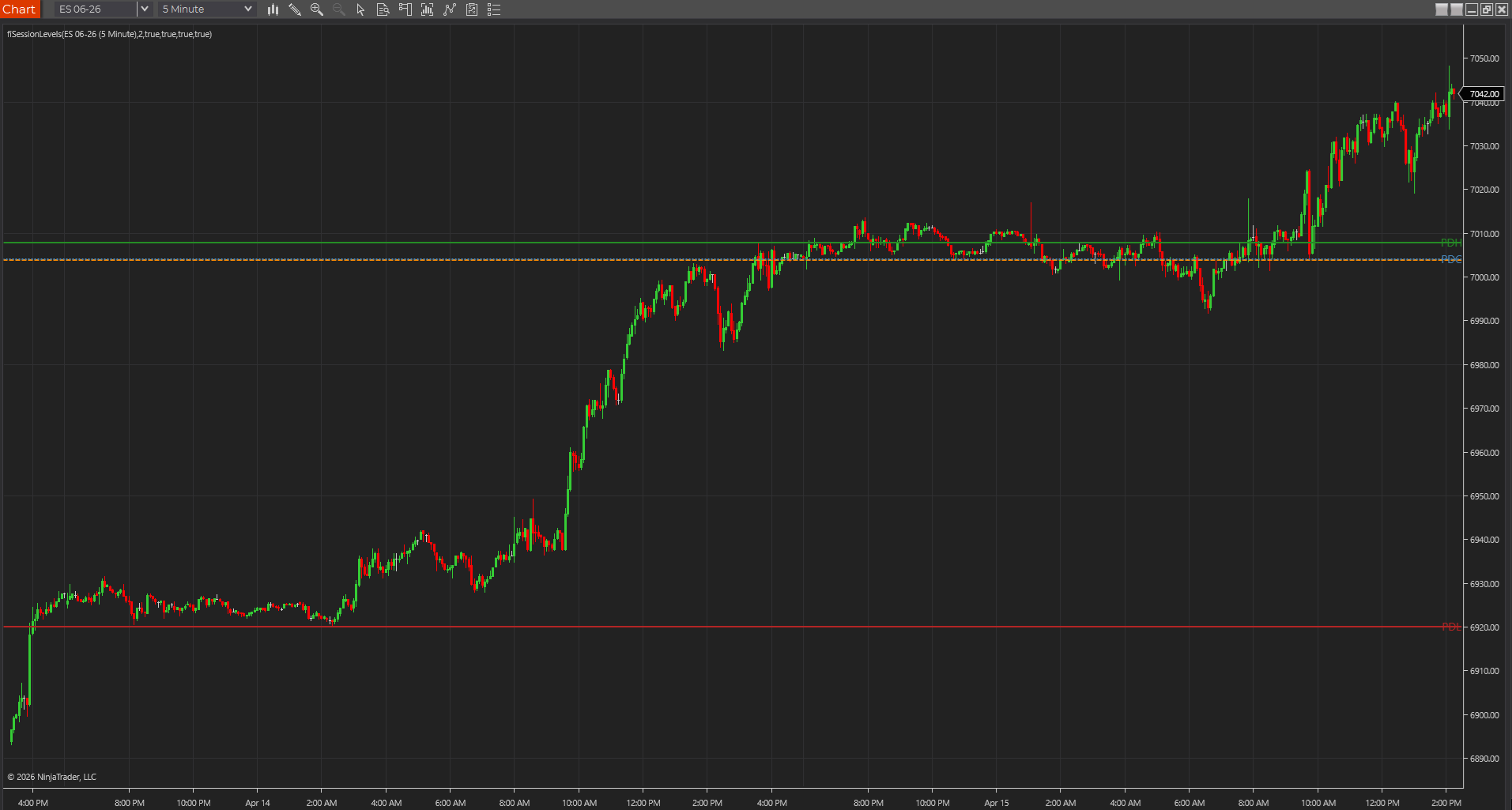
Prior-session references on chart
A NinjaTrader 8 chart showing session reference lines such as prior levels and the session open held in view during live trade.
Best fit
- Preparing basic prior-session levels before the trading session.
- Keeping session open, prior high, prior low, and prior close visible.
- Studying reactions around common intraday reference prices.
Before using it live
- Import the NinjaTrader 8 ZIP through NinjaTrader's normal import flow.
- Apply it to a clean intraday chart first.
- Confirm your session template matches the market hours you want to reference.
- Review how the tool behaves on your actual session template, chart type, and instrument.
Settings to review
Toggles prior session high and low lines.
Toggles the prior session close line.
Toggles the current session open line.
Installation notes
- Import the NinjaTrader 8 ZIP through NinjaTrader's normal import flow.
- Apply it to a clean intraday chart first.
- Confirm your session template matches the market hours you want to reference.
Downloads
Source code
These source examples are provided for copy/paste workflows on other charting platforms. Review and test any script in a simulator before using it on a live chart.
{
  Session Levels
  FreeIndicators.com source example.
  Works as a starting point for TradeStation EasyLanguage and MultiCharts PowerLanguage.
}

Vars: PriorHigh(0), PriorLow(0), PriorClose(0), SessionOpen(0);

If Date <> Date[1] Then Begin
  PriorHigh = HighD(1);
  PriorLow = LowD(1);
  PriorClose = CloseD(1);
  SessionOpen = Open;
End;

Plot1(PriorHigh, "PDH");
Plot2(PriorLow, "PDL");
Plot3(PriorClose, "PDC");
Plot4(SessionOpen, "Open");// Session Levels
// FreeIndicators.com source example for MetaTrader 4.
#property indicator_chart_window
#property indicator_buffers 3
#property indicator_color1 DodgerBlue
#property indicator_color2 Crimson
#property indicator_color3 SeaGreen
double Buffer1[];
double Buffer2[];
double Buffer3[];
int init() {
SetIndexBuffer(0, Buffer1);
SetIndexBuffer(1, Buffer2);
SetIndexBuffer(2, Buffer3);
return(0);
}
int start() {
int counted = IndicatorCounted();
int limit = Bars - counted - 1;
for(int i = limit; i >= 0; i--) {
int shift = iBarShift(Symbol(), PERIOD_D1, Time[i], true) + 1;
Buffer1[i] = iHigh(Symbol(), PERIOD_D1, shift);
Buffer2[i] = iLow(Symbol(), PERIOD_D1, shift);
Buffer3[i] = iClose(Symbol(), PERIOD_D1, shift);
}
return(0);
}// Session Levels
// FreeIndicators.com source example for MetaTrader 5.
#property indicator_chart_window
#property indicator_buffers 3
#property indicator_plots 3
double Buffer1[];
double Buffer2[];
double Buffer3[];
int OnInit() {
SetIndexBuffer(0, Buffer1, INDICATOR_DATA);
SetIndexBuffer(1, Buffer2, INDICATOR_DATA);
SetIndexBuffer(2, Buffer3, INDICATOR_DATA);
return(INIT_SUCCEEDED);
}
int OnCalculate(const int rates_total,
const int prev_calculated,
const datetime &time[],
const double &open[],
const double &high[],
const double &low[],
const double &close[],
const long &tick_volume[],
const long &volume[],
const int &spread[]) {
int start = prev_calculated > 1 ? prev_calculated - 1 : 1;
for(int i = start; i < rates_total; i++) {
int shift = iBarShift(_Symbol, PERIOD_D1, time[i], true) + 1;
Buffer1[i] = iHigh(_Symbol, PERIOD_D1, shift);
Buffer2[i] = iLow(_Symbol, PERIOD_D1, shift);
Buffer3[i] = iClose(_Symbol, PERIOD_D1, shift);
}
return(rates_total);
}//@version=5
indicator("Session Levels", overlay=true)
pdh = request.security(syminfo.tickerid, "D", high[1])
pdl = request.security(syminfo.tickerid, "D", low[1])
pdc = request.security(syminfo.tickerid, "D", close[1])
plot(pdh, "Prior high", color=color.green)
plot(pdl, "Prior low", color=color.red)
plot(pdc, "Prior close", color=color.blue)Limitations
- Session templates directly affect the levels.
- Too many levels can clutter the chart.
- Levels show context, not automatic trade decisions.
Frequently asked questions
Does it repaint?
This tool can revise its most recent labels or levels until enough bars have formed to confirm the swing or range it is using. Older confirmed values should be more stable than the most recent developing ones.
Which platforms are covered?
NinjaTrader 8, TradeStation EasyLanguage, MultiCharts PowerLanguage, MetaTrader 4, MetaTrader 5, TradingView Pine Script are currently represented through downloads or source pages.
Is source code included?
Yes. This page includes source examples or links to platform-specific source pages where applicable.